When Off-the-Shelf Chemistry Fails

Standard supply doesn’t solve specialized processes. A capable blending partner does.

At a certain point, standard chemical supply stops aligning with operational reality. Required concentrations fall outside commercially available ranges. Internal formulations, developed over time to meet specific process needs, become increasingly expensive or complex to produce in-house. In regulated environments, certification requirements or performance tolerances further narrow the set of viable options.

These conditions are not edge cases. They are common across water treatment, oil and gas, food processing, and metal manufacturing—industries where process requirements rarely conform to standardized supply.

In these situations, limitation is not availability. It is fit.

Custom and Contract Blending Serve Different Roles

Blending services are often grouped together, but the distinction between models is operationally significant.

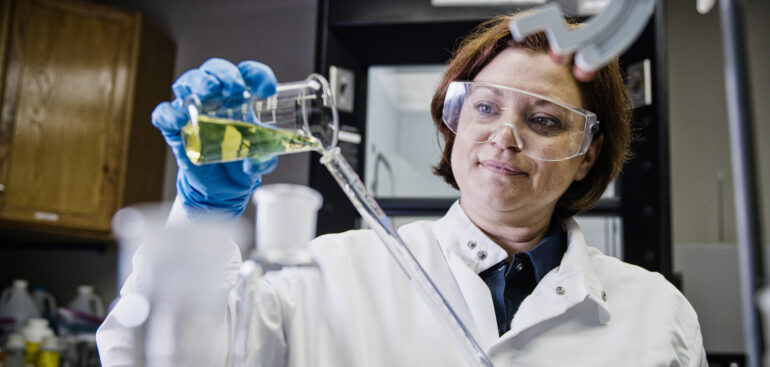
Custom blending is typically applied when a formulation does not yet exist in its required form. A blending partner develops the product to meet defined performance specifications—such as concentration thresholds, compatibility requirements, or inhibitor inclusion—often beginning with lab-scale validation before scaling to production.

Contract, or toll blending, applies when the formulation is already established. In this model, production is outsourced while the customer retains ownership of the formula. The blending partner assumes responsibility for manufacturing, quality control, and delivery.

Both approaches shift production from a fixed-cost structure to a variable one, aligning output with demand and reducing the burden of maintaining in-house blending infrastructure.

Capability Gaps Define Risk

The variability between blending facilities is often underestimated. While capabilities may appear comparable at a high level, differences become more pronounced when hazardous materials or regulated applications are involved.

Facilities configured for non-hazardous blending may lack the infrastructure, containment systems, or certified personnel required to safely handle concentrated acids, oxidizers, or caustics. In these cases, the risk extends beyond the blender—it transfers to the purchasing organization.

Similarly, certification requirements must be evaluated at the application level. FDA or NSF credentials, for example, are necessary for food-grade products, while NSF/ANSI/CAN 60 compliance applies to many water treatment applications. OMRI listing may be required in agricultural contexts. The presence of a certification alone is insufficient; its relevance to the intended use is what determines compliance.

Operational flexibility is another differentiator. Facilities optimized for large-scale production may struggle to accommodate variable demand or smaller batch requirements, creating inefficiencies for customers with fluctuating volumes.

Logistics, often treated as a separate function, also plays a role in overall system reliability. The introduction of third-party carriers can add variability in handling and documentation, particularly for regulated or hazardous materials. Why Brainerd Chemical

Brainerd Chemical was built to handle the kind of complexity that standard blending operations often avoid. Across six facilities, the company supports both hazardous and non-hazardous blending with a level of capability designed for high-demand industrial applications.

Operators are certified to work with some of the most challenging chemistries in use today, including high concentrations of nitric acid, hydrofluoric acid, sulfuric acid, Formaldehyde, sodium hydroxide, custom PAA formulations, and many others. This range is not typical—and it reflects a deliberate focus on supporting customers whose requirements extend beyond standard supply.

From an operational standpoint, the infrastructure is built for both scale and flexibility. With more than 50 large-capacity tanks, batch sizes ranging from 330 to 40,000 gallons, and over 167,000 square feet of warehouse space, the system is designed to accommodate both specialized runs and high-volume production. Custom formulation and toll manufacturing are supported within the same environment, alongside blending programs that meet EPA, NSF, FDA, and OMRI standards.

What distinguishes the model further is end-to-end control. Brainerd operates its own transportation fleet, with DOT-certified drivers and company-owned equipment. That eliminates the need for third-party handoffs, reducing variability and strengthening compliance throughout the supply chain. For customers requiring private labeling, blind shipment, or customized packaging, those capabilities are integrated into the same operation—managed by a single accountable partner.

Reassessing the Blending Model

As process requirements evolve, the limitations of standard supply models become more apparent. In many cases, the decision is less about sourcing a different product and more about restructuring how that product is produced and delivered.

Blending, when aligned with operational needs, becomes less of a constraint—and more of a system that supports scale, compliance, and cost control.

Why Brainerd

Brainerd Chemical is built for the complexity most blenders avoid.

Across six facilities, Brainerd supports both hazardous and non-hazardous blending with certified capability across high-demand chemistries—including nitric acid, hydrofluoric acid, sulfuric acid, Formaldehyde, sodium hydroxide, custom PAA formulations, and many others.

The operation is designed for both scale and flexibility, with batch sizes ranging from 330 to 40,000 gallons and infrastructure that supports custom formulation and toll manufacturing within the same system.

What sets it apart is control. Brainerd operates its own transportation fleet, eliminating third-party handoffs and maintaining chain-of-custody from production to delivery.

For customers requiring private labeling, blind shipment, or specialized packaging, those capabilities are built in—not bolted on.

Fix the Constraint

If blending is driving cost, limiting throughput, or increasing risk, it’s time to change the model.

The right partner doesn’t just produce chemicals. They remove friction from your operation.

Talk to a Brainerd blending specialist:brainerdchemical.com/getstartednow

About Brainerd Chemical Company

Brainerd Chemical Company is a U.S.-based manufacturer and distributor of specialty and commodity chemicals serving agriculture, water treatment, energy, and industrial markets nationwide, with integrated packaging, logistics, and regulatory compliance capabilities.

 Media Inquiries

Brainerd Chemical Company

📞 +1 (918) 622-1214

🌐 www.BrainerdChemical.com

Why the ICIS Top 100 Matters

In the chemical industry, reputation is built on performance, reliability, compliance and consistent stewardship across complex supply chains — not marketing language.

That’s why independent industry benchmarks matter.

The ICIS Top 100 Chemical Distributors ranking, published by ICIS Chemical Business, evaluates distributors globally based on revenue scale, market reach, and industry impact. ICIS tracks global chemical markets in over 120 countries. Inclusion signals more than size — it reflects operational discipline, regulatory alignment, and sustained market relevance in a highly scrutinized industry.

For customers operating in time-sensitive markets such as agriculture, water treatment, energy, and manufacturing, chemical supplier stability is not optional. Reliability directly influences regulatory compliance, operational uptime, and total cost control.

As Jason Jacobus, Vice President, Business Development at Brainerd Chemical, explains: Brainerd Chemical Company’s recognition in the ICIS Top 100 chemical distributors reflects the strength of our safety culture, our people, and our operational discipline. In markets where disruption has real consequences, reliability is not optional.”

In today’s environment—where supply chain volatility, sustainability expectations, and regulatory complexity continue to intensify—independent, third-party benchmarking provides an objective measure of market presence and operational capability. As Joseph Chang, Global Editor of ICIS Chemical Business, observed, “Tariff uncertainty and resulting macroeconomic volatility has been the key theme this year, creating an environment where chemical distributors can demonstrate their value to both suppliers and customers.” Scale alone is insufficient; it must be matched by stewardship, logistics expertise, and disciplined long-term partnership execution. Industry benchmarks do not define a company’s values; rather, they provide evidence of whether those values translate into consistent, measurable performance.

About Brainerd Chemical Company

Brainerd Chemical Company is a U.S.-based manufacturer and distributor of specialty and commodity chemicals serving agriculture, water treatment, energy, and industrial markets nationwide, with integrated packaging, logistics, and regulatory compliance capabilities.

 Media Inquiries

Brainerd Chemical Company

📞 +1 (918) 622-1214

🌐 www.BrainerdChemical.com

Strengthening Communities Through Service

The Brainerd Cares program reflects the company’s ongoing commitment to community engagement in Tulsa and the regions it serves. Structured around core values — safety and stewardship, empowerment and education, compassion and collaboration, and transparency and trust — the program mobilizes employees across company locations to contribute through volunteer service and partnerships with local organizations.

Most recently, Brainerd Chemical volunteers from Tulsa served alongside Iron Gate Tulsa, the city’s largest independent soup kitchen and food pantry whose mission is to feed hungry and homeless community members every day.

Iron Gate Executive Director Carrie Vesely Henderson posted, “Feeding Tulsa takes more than food, it takes people willing to step in and serve. We’re grateful for partners like you.”

During the service event, employees helped serve 707 meals — playing a direct role in supporting food security for vulnerable neighbors and reinforcing the Brainerd Cares program’s emphasis on compassion in action. Iron Gate’s daily operations include a year-round community meal service and supplemental food pantry programs that rely heavily on volunteer support to carry out their mission.

This initiative complements other recent Brainerd Cares activities, including contributions of school supplies to local Back-to-School resource fairs, participation in Tulsa Area United Way volunteer events, and collaboration with partners such as the City Lights Foundation. Through sustained engagement and hands-on service, the Brainerd Cares program demonstrates how corporate stewardship can translate into a measurable community impact where employees live and work.

About Brainerd Chemical Company

Brainerd Chemical Company is a leading U.S. manufacturer and distributor of specialty and commodity chemicals, committed to safely delivering the solutions customers need, the expertise they value, and the reliability they depend on — every day.

Media Inquiries

Brainerd Chemical Company

📞 +1 (918) 622-1214

🌐 www.BrainerdChemical.com

Brainerd Chemical Wins Top Workplace

FOR IMMEDIATE RELEASE

Brainerd Chemical Named a Top Workplace in Oklahoma for Fifth Time in Six Years

TULSA, Okla. (2025) — Brainerd Chemical Company has been named a Top Workplace in Oklahoma by The Oklahoman for the fifth time in six years, an honor based entirely on anonymous employee feedback.

The recognition places Brainerd Chemical among a select group of mid-sized organizations consistently recognized for strong workplace culture, employee trust, and leadership effectiveness. Winners are determined through a confidential third-party survey administered by Energage, which measures employee experience across areas such as respect, growth opportunities, empowerment, and work-life balance.

“Stewardship guides how we lead and how we show up for one another,” said Mat Brainerd, chairman and CEO of Brainerd Chemical. “This recognition matters because it reflects how our employees feel about their work, their voices, and the culture we’re building together.”

Brainerd Chemical was recognized in the 35–149 employee category.

Gregg Johnson, human resources director, said the award reinforces the company’s commitment to listening and accountability. “We ask for honest feedback, and we take it seriously. This recognition belongs to our team and the trust they place in us every day.”

Founded more than 65 years ago, Brainerd Chemical manufactures, blends, and distributes specialized chemistries, including high-hazard materials, through a national network of rail terminals and bulk storage facilities. The company serves domestic and international markets with a focus on safety, reliability, and long-term partnerships.

The Top Workplaces award is one of the nation’s most credible workplace recognitions, relying solely on employee survey data rather than nominations or judging panels.

About Brainerd Chemical Company

Brainerd Chemical Company is a privately held chemical manufacturer and hybrid distributor specializing in high-hazard chemistries and complex supply chains. Headquartered in Tulsa, Oklahoma, the company operates facilities across the United States and serves customers worldwide.

Media Inquiries

Brainerd Chemical Company

📞 +1 (918) 622-1214

🌐 www.BrainerdChemical.com

Why Redundant Hydrogen Peroxide Supply Matters

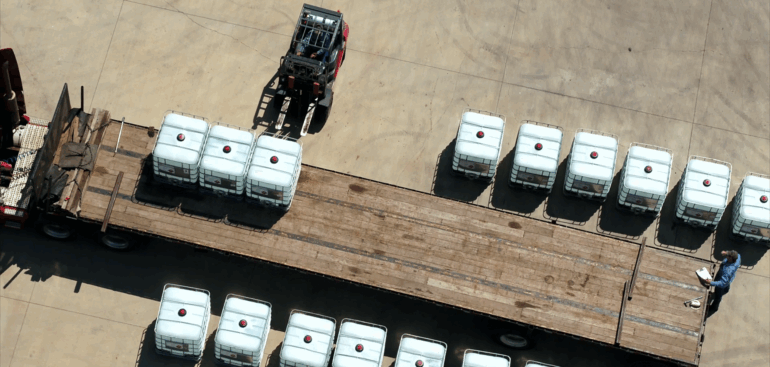
Loading industrial hydrogen peroxide

Brief: Facilities that rely on a single hydrogen peroxide supply source face greater operational risk when supply tightens. With no new producers coming online and existing plants operating on aging infrastructure, even routine maintenance can disrupt production. This article explores why redundant sourcing, disciplined storage and handling, and reliable distribution partners are essential to maintaining operational continuity.

“In a tight market, reliability comes from doing the fundamentals right every day,” says Derk Pinkerton, Corporate Sales Supervisor. “Redundant supply only works if the chemistry, the equipment, and the people handling it are aligned. Stewardship is what keeps all three working together when conditions get challenging.”

Hydrogen peroxide is one of those chemicals most operations don’t think about until it becomes a problem. It supports essential processes across water treatment, manufacturing, energy production, pulp and paper, and environmental remediation. It works cleanly, reacts predictably, and often sits quietly in the background doing exactly what it’s supposed to do.

What has changed is the market that supports it. With no meaningful new domestic producers entering the market, and much of the existing capacity depends on aging production assets. Many facilities are operating near their practical limits, which leaves little room to absorb disruptions. When a producer goes down for planned maintenance or unexpected equipment issues, availability can tighten quickly. For operations that rely on hydrogen peroxide as a core process input, this isn’t just a purchasing concern. It’s an operational risk. Unlike some bulk chemicals, hydrogen peroxide cannot be stockpiled indefinitely. It degrades over time, and storage conditions must be carefully controlled. That reality limits how much buffer inventory a facility can realistically carry and places more importance on the reliability of the supply chain itself.

Facilities that depend on a single producer or distribution path are often the first to feel pressure when supply tightens. Delayed deliveries, spot-market pricing, and last-minute substitutions can disrupt production schedules and create downstream compliance challenges. In some cases, the impact isn’t measured in days, but in hours.

Redundant supply planning helps reduce that exposure. Working with qualified distributors who maintain multiple sourcing options, flexible packaging formats, and established logistics networks allows operations to stay ahead of disruptions rather than react to them.

Storage and handling practices also play a role in supply continuity. Contamination, incompatible materials, or poor temperature control can accelerate decomposition and take equipment or inventory out of service. In a constrained market, losing usable product to preventable issues adds unnecessary strain.

Transportation discipline matters just as much. Properly trained drivers, dedicated equipment, and thoughtful delivery scheduling help minimize on-site dwell time and reduce risk during transfer. Reliable distribution is not separate from process safety. It is part of it.

As hydrogen peroxide demand continues across critical industries, the question is no longer whether supply disruptions will happen, but how prepared facilities are when they do. Redundant sourcing, responsible distribution, and proactive planning help ensure hydrogen peroxide remains a dependable tool rather than a vulnerability.

For many facilities, redundant supply planning starts with choosing the right distribution partner. Brainerd Chemical Company supports industrial hydrogen peroxide customers through a diversified supply network designed to reduce single-point failures. Brainerd Chemical provides hydrogen peroxide in concentrations ranging from 1-50% that includes access to multiple qualified production sources, dedicated peroxide-compatible equipment, and flexible packaging options ranging from drums and totes to bulk deliveries.

Just as important is Brainerd’s stewardship approach. Storage compatibility, contamination prevention, transportation discipline, and customer training are treated as part of supply reliability, not separate safety checkboxes. By aligning operational knowledge with a focus on responsible distribution, Brainerd helps customers maintain continuity, protect on-site systems, and avoid the downstream impacts that occur when peroxide supply becomes constrained at the wrong moment.

Why Talent Is a Strategic Priority

Every year, the Alliance for Chemical Distribution (ACD) annual meeting offers a clear snapshot of where the industry is headed. But this year, one theme rose above the rest: the companies winning the next decade are the ones investing in people, not just processes.

“In today’s chemical industry, strategy only matters if you have the people who can execute it. Talent, training, and leadership development are now as critical to competitiveness as safety and supply reliability.”
Matt Brainerd, Chairman, Brainerd Chemical Company

With regulatory pressures reshaping operations, global trade dynamics introducing new volatility, and customers expecting more transparency and responsiveness than ever before, workforce capability has become a true differentiator. The companies developing their people — their judgment, leadership, technical expertise, and communication skills — are the ones building the strongest foundations for growth.

A Competitive Advantage

For decades, the chemical sector has leaned heavily on operational efficiency, footprint, and supply reliability. While these remain essential, the industry’s evolution is forcing an additional layer of capability: talent that can think, adapt, lead, and collaborate in increasingly complex environments.

In this environment, people become the stabilizing force, the problem-solvers who ensure reliability, trust, and resilience even when market conditions shift. That’s why the conversations at ACD focused not only on where the industry is going, but who will lead it forward.

A Path Forward

Brainerd Chemical has long believed that industry leadership isn’t defined by scale, but by the discipline, capability, and character of your people. Talent is a strategic differentiator in chemical distribution as essential as supply reliability and safety performance.

The companies building stronger teams today aren’t just more competitive — they’re building stronger a more resilient chemical industry for tomorrow.

Do You Know? Hydrogen Peroxide

Hydrogen peroxide is an incredibly versatile chemical used in a variety of applications including:

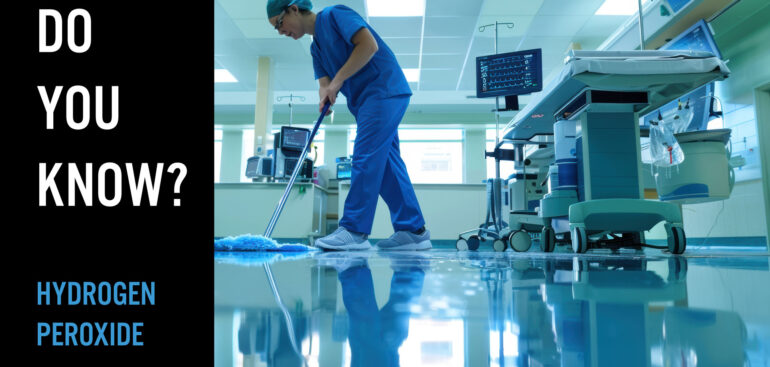
  • Healthcare:  Hospitals use hydrogen peroxide products to kill pathogens like cryptosporidiosis and norovirus.
  • Aerospace: H2O2 propulsion systems powered thrusters in the Gemini and Apollo spacecraft; today, many small satellites are controlled with H2O2 vapor systems.
  • Energy: Oil & natural gas producers use hydrogen peroxide based PAA biocides because they are effective while reducing environmental risks.
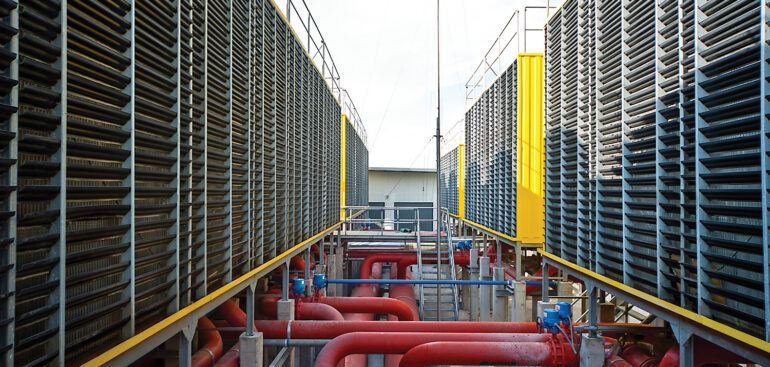
  • Water and sewage treatment: Hydrogen peroxide is a prime ingredient in PAA, an eco-friendly disinfectant revolutionizing the industry with safer, more responsible solutions.

Brainerd Chemical supplies hydrogen peroxide in concentrations ranging from 1-50% in pail, drum, or tote packaging as well as bulk delivery.

About Brainerd Chemical Company

Brainerd Chemical Company is one of the largest independent suppliers of chemicals and related services in the continental United States. They specialize in manufacturing, blending, packaging, and distributing chemical products across a diverse range of industrial sectors.

Media Inquiries:

Brainerd Chemical Company:  1+ (918) 622-1214