
Why the Strongest Safety Programs Depend on People, Not Policies.
Every chemical facility has procedures. Training is scheduled. Audits are completed. Safety meetings fill calendars.
Yet the safest organizations know something that can’t be captured in a binder or measured on an inspection form: safety is ultimately a people business.
Long before an incident occurs—or is prevented—employees make hundreds of decisions that influence outcomes. They ask questions. Double-check a connection. Pause a task that doesn’t feel right. Speak up when they see a potential risk.
Those moments are where safety culture is built. Yet the organizations that consistently achieve the best safety outcomes understand an important truth: Safety is not created during an audit. It is created every day through a culture fostered by leadership and embraced by people.
Policies, procedures, and regulations establish an essential foundation. They define expectations and provide structure. But real safety performance is determined by thousands of decisions made by employees, supervisors, operators, drivers, and leaders throughout the course of normal operations.
The strongest safety cultures emerge when safety becomes more than a requirement. It becomes a shared responsibility.
Safety culture in chemical manufacturing is built through daily behaviors, decisions, and conversations—not just audits, training programs, or compliance requirements. While policies and procedures provide the foundation, lasting safety performance depends on leadership, communication, teamwork, and employee engagement. Organizations with strong safety cultures create environments where every employee takes ownership of safety, identifies risks, and actively looks out for one another.
Why Compliance Alone Doesn’t Create a Safety Culture
In highly regulated industries such as chemical manufacturing and distribution, compliance matters. Regulatory standards exist for good reason. They help establish consistent practices designed to protect employees, communities, customers, and the environment.
But compliance alone does not create a safety culture.
Organizations can maintain complete documentation, conduct required training, and still struggle to create an environment where employees feel empowered to identify risks, stop unsafe activities, or speak up when something doesn’t seem right.
The difference lies in engagement.
When employees view safety as a management responsibility, opportunities can be missed. When employees view safety as everyone’s responsibility, awareness becomes part of daily operations.
Every Employee Influences Safety
One of the most powerful characteristics of a mature safety culture is the understanding that every individual contributes to safer outcomes.
A driver completing a pre-trip inspection.
A production employee identifying a potential hazard.
A supervisor reinforcing a best practice.
A team member asking a question before proceeding with an unfamiliar task.
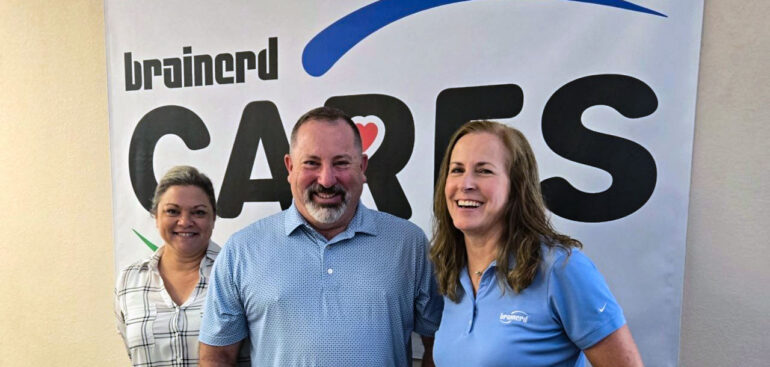
These moments may seem small, but collectively they shape workplace culture. Mike Hodnett, General Branch Manager of Brainerd’s Dunn facility, reminds us that every single employee plays a role in creating a workplace built on thoughtful decisions and shared responsibility. Organizations with strong safety records understand that responsibility cannot rest solely with management, policies or safety notices. It must be a culture embraced by the entire workforce.
Leadership Sets the Tone
While safety belongs to everyone, leadership plays a critical role in establishing expectations and reinforcing behaviors.
Employees pay close attention to what leaders prioritize. When production schedules consistently outweigh safety concerns, employees notice. When leaders invest in training, encourage communication, and actively participate in safety discussions, employees notice that too.
At Brainerd Chemical, COO Neil Morgan often emphasizes that effective safety programs must be practical enough to work in the real world. As he recently explained, successful safety cultures are built by creating processes that are “clear, practical and actionable” and supporting them through strong communication and teamwork.
That philosophy reflects an important reality: safety procedures only create value when people understand them, trust them, and consistently apply them.
The Connection Between Teamwork and Safety
Safety is often discussed as an individual responsibility, but it is equally a team effort.
Communication, trust, and accountability are critical components of effective safety performance.
Teams that communicate openly are more likely to identify hazards before they become incidents.
Teams that trust one another are more willing to ask questions and raise concerns.
Teams that hold one another accountable create environments where safe behaviors become standard operating practice rather than occasional reminders.
In many ways, safety serves as a reflection of organizational teamwork. Strong teams tend to operate more safely because they actively look out for one another.
Building a Better Industry
In chemical manufacturing, safety culture is not defined by the absence of incidents. It is defined by the daily behaviors, decisions, and conversations that help prevent them.
Creating a stronger industry requires more than regulatory compliance. It requires leadership, accountability, continuous improvement, and a shared commitment to doing the right thing—even when no one is watching.
That commitment is reflected in the perspectives shared throughout Brainerd’s organization: practical safety processes, clear communication, strong teamwork, thoughtful decisions, and shared responsibility. Together, these principles help create an environment where safety is not simply a program—it becomes part of how people work every day.
The organizations that will lead the future of the chemical industry are not simply those with the strongest products or largest facilities. They will be the organizations that create cultures where safety is embedded in every decision, every conversation, and every action.
Because the strongest safety programs are not built during audits. They are built between them.
About Brainerd Chemical Company
Brainerd Chemical Company helps manufacturers, municipalities, agricultural operations, and industrial organizations solve complex chemical challenges safely and reliably. As a leading U.S. chemical manufacturer and distributor, Brainerd combines quality products, technical expertise, and responsive service to help customers succeed every day.
Media Inquiries
Brainerd Chemical Company
📞 +1 (918) 622-1214