Five Questions Every Chemical Procurement Team Should Ask

Price is only one part of the equation. Today’s leading manufacturers evaluate chemical suppliers based on reliability, expertise, safety, and long-term partnership potential.

Two suppliers submit bids for the same chemical. One is 4% less expensive. The other has a stronger safety record, regional inventory, technical support, and decades of regulatory expertise.
Which supplier represents the better business decision? For experienced procurement leaders, the answer is becoming increasingly clear: the lowest price rarely delivers the lowest total cost.

So, What Should You Expect (Demand) From Your Chemical Supplier?

The best chemical suppliers offer more than competitive pricing. Manufacturers should evaluate supply reliability, technical expertise, regulatory support, safety performance, inventory capabilities, packaging flexibility, logistics, and long-term partnership potential. Choosing the right supplier can reduce operational risk while improving production continuity and total cost of ownership.

  1. Can They Deliver Consistently?
    Your production line can’t wait for a delayed shipment. Reliable delivery protects production schedules—and customer commitments. Evaluate:
    • JIT capabilities
    • Inventory availability
    • Multiple distribution locations
    • Emergency response capabilities
    • Proven delivery performance
    • Supply chain resilience
  2. Do They Bring Technical Expertise?
    Industrial chemicals are rarely “plug-and-play.” Technical guidance often creates more long-term value than incremental price savings. True partners help you optimize your supply chain:
    • Product selection
    • Handling procedures
    • Storage requirements
    • Application performance
    • Regulatory compliance

The strongest customer relationships begin long before the first shipment arrives. Our role is to help customers reduce operational risk by combining dependable supply with practical technical expertise that supports their long-term success.
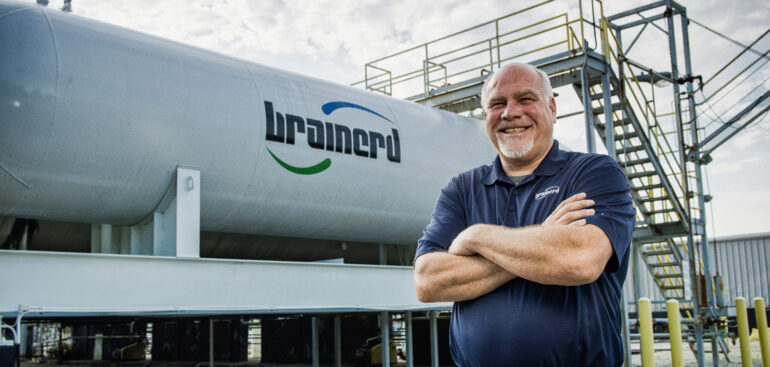
— Brian Miller, President, Brainerd Chemical Company

  1. Is Safety Part of Their Culture?
    Strong safety cultures often translate into stronger operational performance. Safety shouldn’t end when a shipment leaves the loading dock. Look for suppliers with demonstrated commitment to:
    • Employee training
    • Regulatory compliance
    • Product stewardship
    • Responsible transportation
    • Emergency preparedness
  2. Can They Grow With Your Business?
    Scalable partnerships reduce the need to change suppliers as operations evolve. Today’s supplier should also support tomorrow’s production goals. Ask about:
    • Packaging options
    • Technical resources
    • Regional inventory
    • Manufacturing capabilities
    • Capacity for future growth
  3. Will They Be a Partner—or Just a Vendor?
    The best suppliers solve problems before they become disruptions. They proactively communicate, share technical knowledge, and collaborate to improve operations—not simply process purchase orders.
    Those relationships often create measurable value long after the initial contract is signed.

Stewardship – Value Beyond Price

Procurement has evolved. Today’s purchasing decisions influence production reliability, operational efficiency, sustainability initiatives, regulatory confidence, and long-term business resilience.
The organizations creating the greatest competitive advantage are not simply buying chemicals – they are choosing strategic partners.
The right chemical supplier does far more than deliver product. They help manufacturers reduce risk, improve operational performance, and prepare for future growth.
As supply chains become more complex and customer expectations continue to rise, procurement decisions have never carried greater strategic importance.
The question is no longer: “Who offers the lowest price?”
The question is: “Who will help us operate more successfully over the next decade?”

Move Toward Success

Whether you’re evaluating a new supplier, expanding production, or strengthening supply chain resilience, Brainerd Chemical’s technical and logistics specialists work alongside manufacturers to build dependable, long-term partnerships that support operational success.
Contact Brainerd Chemical to learn how the right supplier relationship can create value well beyond the purchase order.

Six Conversations We’ll Be Having at ChemEdge 2026

ChemEdge offers more than a look at new products—it provides an early view of the conversations shaping the future of chemical distribution. Here are six topics every manufacturer should be watching.

Walk the aisles of ChemEdge and you’ll notice something interesting. The most engaging conversations aren’t about commodity pricing or the latest product announcement. They’re about resilience, risk, workforce challenges, and how manufacturers can build stronger partnerships in an increasingly complex operating environment. Those conversations matter long after the conference ends because they influence how leading organizations choose suppliers, manage operations, and prepare for the future.

Our customers expect more than dependable chemical supply. They value technical expertise, operational insight and the ability to help solve tomorrow’s challenges—not just fill today’s orders.”

— Neil Morgan, President, Brainerd Chemical Company, COO

  1. How can manufacturers build a more resilient chemical supply chain? Manufacturers can build a more resilient chemical supply chain by working with suppliers that maintain regional inventory, diversified sourcing, strong logistics networks, and contingency plans for disruptions. Those resilient suppliers also provide proactive communication, technical support, and collaborative planning to help customers reduce operational risk and maintain production continuity. The past several years demonstrated that supply chain resilience is no longer simply a logistics game—it’s a competitive advantage. Weather events, transportation disruptions, changing regulations, and geopolitical uncertainty continue to challenge manufacturers across virtually every industry. Forward-thinking organizations increasingly evaluate suppliers based on their ability to anticipate disruptions, communicate early, and develop contingency plans before production is affected. At Brainerd Chemical, those conversations increasingly center on building long-term resilience through regional distribution, dependable inventory, and collaborative planning—not simply responding after a disruption occurs.
  2. What should manufacturers look for in a chemical supplier? The best chemical suppliers offer more than competitive pricing. Manufacturers should evaluate technical expertise, safety performance, regulatory knowledge, inventory availability, logistics capabilities, packaging flexibility, and long-term partnership potential. A supplier that contributes operational insight often creates greater long-term value than one competing primarily on price. Increasingly, procurement leaders are asking a different question. Instead of, “Who has the lowest price?”, savvy organizations are asking, “Who helps us be more competitive?”. The strongest supplier relationships combine dependable delivery with technical expertise that helps customers improve efficiency, reduce risk, and solve operational challenges. That’s one reason conversations at ChemEdge continue shifting from transactional purchasing toward strategic partnerships.
  3. How is sustainability changing the chemical industry? Sustainability in the chemical industry is increasingly focused on practical operational improvements rather than reporting metrics alone. Manufacturers are evaluating a wide variety of aspects from packaging improvements to delivery logistics that reduce environmental impact while improving productivity and lowering total operating costs. Today’s sustainability initiatives are becoming measurable business improvements. Organizations are looking for opportunities to: • reduce packaging waste • improve transportation efficiency • optimize chemical usage • reduce water consumption • improve operational efficiency Suppliers that understand both environmental stewardship and day-to-day manufacturing operations can help customers identify opportunities that benefit both sustainability objectives and operational performance.
  4. How is technology changing chemical distribution? Technology is transforming chemical distribution through improved inventory visibility, shipment tracking, digital documentation, predictive analytics, AI-assisted customer support, and data-driven supply chain planning. Manufacturers increasingly expect suppliers to provide both chemical products and digital tools that improve operational decision-making. Digital transformation extends well beyond online ordering. Manufacturers increasingly expect: • electronic documentation • faster regulatory information • shipment visibility • predictive inventory planning • faster technical support The distributors creating the greatest value are using technology to strengthen relationships—not replace them. We expect our ChemEdge conversations will focus on how digital capabilities are increasingly becoming a core expectation.
  5. What workforce challenges are chemical manufacturers facing? Chemical manufacturers face growing workforce challenges as experienced professionals retire and competition for technical talent increases. Companies are investing in knowledge transfer, workforce development, safety training, and technical partnerships to preserve operational expertise while preparing the next generation of employees. Perhaps the most important challenge facing the industry is not technological. It’s human. Decades of operational knowledge are leaving the workforce through retirement. Organizations increasingly depend on supplier partners who can supplement internal expertise through technical consultation, training, regulatory guidance, and application support. Collaborative relationships help preserve institutional knowledge while supporting operational continuity.
  6. Why are manufacturers choosing strategic chemical partners instead of transactional suppliers? Manufacturers are increasingly choosing strategic chemical partners because dependable supply, technical expertise, regulatory support, and collaborative problem-solving reduce operational risk and improve long-term performance. Strategic partnerships create value beyond the purchase order by helping organizations improve safety, efficiency, compliance, and business continuity. The chemical supply is only part of the value equation. Our customers increasingly rely on us to: • Help them solve complex problems • Truly understand their operational demands • Scale in lock step with their business • Provide strategic solutions that help them be competitively positioned for the long term

The Conversation That Matters Most

After all the discussions about supply chains, technology, sustainability, workforce development, and digital transformation, one conversation ultimately matters most: choosing the right partner.

For decades, Brainerd Chemical has built its business around that belief. By combining dependable chemical supply with technical expertise, responsive service, and collaborative planning, we strive to become an extension of our customers’ operations—not simply another supplier.

We are also proud to support the broader chemical distribution industry as an Alliance for Chemical Distribution (ACD) Platinum Sustaining Partner. ChemEdge represents more than an annual conference; it’s an opportunity to share ideas, strengthen relationships, and work alongside manufacturers, suppliers, and industry leaders to advance safety, innovation, and operational excellence.

The conversations at ChemEdge don’t end when the exhibit hall closes. They continue in manufacturing facilities, procurement meetings, engineering offices, and operations centers across the country. If your organization is evaluating supplier relationships, strengthening supply chain resilience, or preparing for future growth, we would welcome the opportunity to continue the conversation. Together, we can explore practical ideas that help reduce risk, improve performance, and create long-term value.

If you’re attending ChemEdge 2026, connect with Brainerd Chemical and say hello. We would enjoy hearing what’s at the top of mind for your team, exchanging ideas, and discussing the challenges and opportunities shaping the future of manufacturing and chemical distribution.

Join us at ChemEdge 2026 • August 12–14, 2026 • Atlanta, Georgia

Brainerd Chemical — Platinum Sustaining Partner

Smarter Chemical Packaging

Learn how the right packaging solutions can help you improve safety, compliance, and operational performance.

A chemical package has one job: arrive safely and perform exactly as expected.

Yet packaging decisions influence far more than transportation.

The right packaging strategy can improve safety, simplify compliance, reduce handling costs, support private-label programs, and strengthen supply chain performance. The wrong one can create operational headaches long after the shipment leaves the facility.

Proven chemical packaging providers like Brainerd Chemical Company help manufacturers improve safety, compliance, operational efficiency, and supply chain reliability.

What are chemical packaging services?
Chemical packaging services help manufacturers safely package, label, store, transport, and distribute chemical products. Services may include custom packaging, private labeling, contract packaging, bulk handling, regulatory compliance support, and logistics coordination. Many manufacturers also rely on chemical packaging providers to support brand expansion, new product launches, and regional distribution strategies.

Packaging Impacts More Than Transportation

Every chemical operation is different. What works well for one facility may create challenges for yours. Container size, material compatibility, handling requirements, storage constraints, transportation methods, and end-user needs all influence the right packaging strategy.

When packaging is treated as an afterthought, organizations often experience:

  • Increased handling and labor costs
  • Product waste and container damage
  • Storage inefficiencies
  • Transportation limitations
  • Higher regulatory risk
  • Greater potential for spills and exposure incidents

These costs rarely appear on an invoice, but they can significantly impact operations over time.

Safety Starts With the Right Container

For hazardous and specialty chemicals, packaging is a critical part of risk management.

The right packaging helps protect employees during handling, transportation, storage, and use. The wrong packaging can increase exposure risks, create unnecessary handling steps, and complicate emergency response efforts.

Your packaging strategy should support safe operations from the moment a product is filled until it reaches its final application.

That requires more than selecting a container. It requires understanding how the product will move through the entire supply chain.

Packaging That Scales With Demand

Many organizations face changing production schedules, fluctuating demand, and evolving customer requirements. A packaging partner should be able to support a variety of formats, including pails, drums, totes, bulk shipments, and customized white-label packaging solutions.

Flexibility helps organizations adapt to changing business needs without disrupting operations or introducing unnecessary risk.

Packaging That Supports Your Brand

Chemical packaging involves more than filling containers. It requires an understanding of chemical compatibility, labeling requirements, transportation regulations, quality control procedures, and customer-specific specifications.

Packaging experience matters because many problems can be prevented long before a shipment leaves the facility.

Private labeling and white-label chemical packaging allow your organization to bring products to market under your own brand while relying on an experienced packaging partner to execute behind the scenes. You’ll better maintain consistency across packaging formats, support regulatory compliance, and simplify supply chain management without requiring additional internal resources.

Whether you need branded containers, custom labeling, blind shipping, or specialized packaging requirements, flexibility matters because it supports both operational goals and business growth.

This is especially valuable when your organization is looking to expand product offerings, enter new markets, or streamline distribution without investing in additional packaging infrastructure.

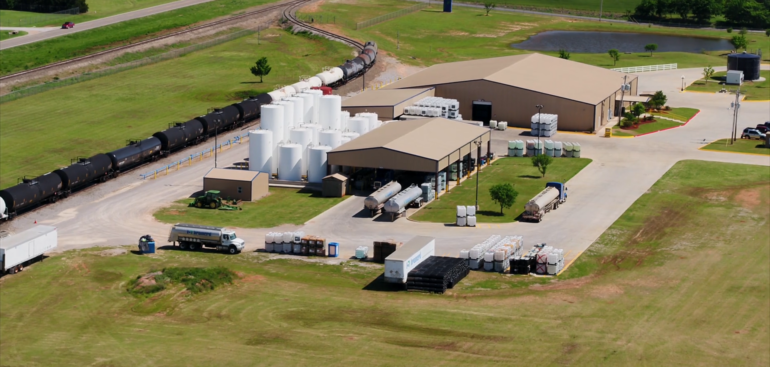
Brainerd Chemical Company supports a wide range of packaging requirements, including custom packaging, contract packaging, private-label programs, blind shipping, and bulk packaging solutions. Packaging operations support everything from pails and drums to totes and bulk shipments, including products that require specialized handling due to corrosive, oxidizing, or hazardous characteristics.

With packaging operations strategically located across the United States, Brainerd helps customers maintain supply chain flexibility while supporting regional and national distribution requirements.

Packaging Is a Strategic Decision

Whether packaging nitric acid, sulfuric acid, hydrochloric acid, sodium hydroxide, or specialty chemical formulations, the requirements extend far beyond selecting a container. When evaluating packaging options, you’ll need to consider material compatibility, transportation regulations, storage conditions, customer requirements, and worker safety.

The best packaging programs do more than move products from one location to another. They help protect your employees, support compliance, strengthen customer relationships, and create operational flexibility.

Whether the need is bulk transportation, custom packaging, private labeling, or specialized handling for hazardous chemicals, the right packaging partner becomes an extension of your operation.

That’s why the most effective organizations no longer view packaging as a shipping function. They view it as a competitive advantage.

About Brainerd Chemical Company

Brainerd Chemical Company is a leading North American manufacturer, distributor, packager, and logistics provider of specialty and commodity chemicals. Through chemical manufacturing, custom packaging, private-label programs, contract packaging, and supply chain support, Brainerd helps customers operate safely, maintain compliance, and meet the demands of an increasingly complex marketplace.

Media Inquiries

Brainerd Chemical Company

📞 +1 (918) 622-1214

🌐 www.BrainerdChemical.com

PFAS Reporting Was Just the Beginning

Across the industrial sector, companies are spending significant time and resources preparing PFAS disclosures under TSCA Section 8(a)(7). For many organizations—and the suppliers that support them—the question is no longer ‘how do we file?’ It’s ‘what does the government do with what we just told them, and what does that mean for us next?


For facilities that submitted on time, the work ahead is about understanding what their submission revealed and what obligations may follow. For facilities still finalizing submissions — or those who missed the window and are weighing their options — the calculus is more urgent.

Either way, the comfortable idea that PFAS compliance is a one-time reporting event has quietly expired.

What the EPA does with your data — and when

The CDX submissions flowing in this spring will be aggregated, reviewed for completeness, and eventually made available in searchable public databases — with confidential business information redacted but most structural and volume data visible. That public record will be accessible to environmental advocates, litigants, municipal water utilities, and downstream customers asking pointed questions about what their suppliers manufacture and release.

EPA has been clear that TSCA 8(a)(7) data will directly inform future regulatory action. The agency has signaled interest in several areas: additional use restrictions for specific PFAS subclasses, expanded reporting requirements as the science around shorter-chain compounds matures, and potential enforcement actions where submissions reveal patterns inconsistent with prior environmental disclosures.

The timeline below reflects where most industrial facilities sit today and what’s coming down the regulatory pipeline.

Right now – Reporting window open; submissions being received

Most facilities are in active submission or finalizing data packages. CDX electronic reporting is live. Small manufacturers have an extended deadline of October 13, 2026.

Late 2026 – EPA begins data aggregation and quality review

EPA staff will cross-reference submissions against prior TRI reports, CERCLA disclosures, and state environmental databases. Facilities with significant discrepancies may receive follow-up data quality requests.

2027 – Public database release and stakeholder scrutiny

Aggregated PFAS data will become publicly searchable. Downstream customers, investors, municipal utilities, and NGOs will use this to evaluate supplier and facility profiles. Expect procurement questions that reference your submission data.

2027-2029 – Next-generation rulemaking informed by this data

EPA has stated that TSCA 8(a)(7) data will drive future regulatory priorities — including potential restrictions on PFAS classes not yet specifically regulated, and expanded reporting thresholds for emerging compounds like TFA.

Ongoing – Litigation and liability exposure tied to disclosed data

Historical PFAS volumes documented in TSCA submissions may be introduced in environmental tort cases. Facilities that disclosed large historical volumes without corresponding remediation programs should consult legal counsel proactively.

Still finalizing your submission?

The October 13, 2026 extended deadline applies to small manufacturers. All other facilities are in the active reporting window now. If your organization missed the April 13 start or is still assembling data, documented good-faith effort — and prompt action — matters significantly in how EPA handles follow-up. Consult your environmental counsel and do not wait.

PFAS is no longer a back-office compliance item

Here’s what’s changed quietly in the past eighteen months: PFAS disclosure has migrated from the environmental compliance department into boardroom risk conversations, customer procurement decisions, and ESG reporting frameworks. The TSCA filing is a formal government disclosure — but it’s also, effectively, a public statement about your facility’s chemical footprint that will persist in searchable databases indefinitely.

Water utilities serving communities near manufacturing facilities are already querying PFAS datasets to build their own risk profiles. Institutional investors are referencing chemical disclosure records in ESG screenings. Industrial customers in food, beverage, and consumer goods — sectors particularly sensitive to PFAS reputational exposure — are asking their chemical suppliers for transparency that goes well beyond an SDS sheet.

This isn’t hypothetical future pressure. These conversations are happening in procurement meetings right now, often with reference to data that didn’t exist publicly six months ago.

The facilities that will navigate this era most confidently aren’t the ones who filed and moved on. They’re the ones who treated the filing as the foundation of an ongoing story they’re prepared to tell clearly.

TFA: The next PFAS conversation taking shape

Trifluoroacetic acid — TFA — doesn’t appear in most U.S. facility compliance programs today. It’s not currently regulated domestically. But TFA is increasingly present in global water monitoring data, European regulatory discussions are intensifying, and it’s beginning to appear in the scientific literature as a persistent degradation product of multiple PFAS classes and fluorinated refrigerants.

The regulatory arc for TFA looks familiar to anyone who watched PFOA and PFOS move from industrial workhorse to restricted substance over the past two decades: detection data accumulates, health and environmental research follows, and regulatory attention converts to action — usually faster than industry models predict.

Facilities with fluorine-intensive manufacturing processes, or those using PFAS-containing products in high-volume water-contact applications, should be having internal conversations about TFA now — not because it’s regulated, but because the cost of being caught unprepared is orders of magnitude higher than the cost of awareness.

Science in motion

TFA has been detected at elevated concentrations in European rainwater, surface water, and drinking water sources. The European Chemicals Agency (ECHA) has flagged it for priority review. U.S. regulatory action has not followed — yet. Facilities that monitor emerging science independently rather than waiting for domestic rulemaking maintain a meaningful preparation advantage.

What active PFAS risk management looks like in 2026

Chemical suppliers play a meaningful role in all three tracks. Brainerd Chemical has long emphasized product traceability, documentation, and customer support because regulatory environments rarely become simpler over time. When suppliers provide clean, structured product data and responsive technical support, customers spend less time chasing information and more time managing risk. In an environment where transparency increasingly influences procurement decisions, regulatory reviews, and public perception, that support becomes a measurable business advantage.

The facilities handling PFAS most capably right now aren’t treating it as a single compliance obligation. They’ve organized their exposure across three distinct tracks that require different teams, different timelines, and different kinds of expertise.

Regulatory compliance track

TSCA 8(a)(7) submissions, documentation retention, CDX account maintenance, and readiness for data quality follow-up from EPA. This track belongs to EHS and legal.

Supply chain transparency track

Responding to downstream customer inquiries, aligning PFAS data with procurement questionnaires, and ensuring supplier data flows upstream accurately. This track involves procurement and product stewardship.

Forward risk track

Monitoring emerging science (TFA, ultra-short-chain PFAS), tracking state-level regulatory action, and evaluating formulation alternatives where PFAS exposure carries long-term liability. This track needs executive attention.

Most facilities manage the first track reasonably well. The second is where gaps appear — because customer-facing transparency requires coordination across teams that rarely sit in the same room. The third track is where strategic differentiation happens, and where most organizations have the most ground to gain.

Chemical suppliers play a meaningful role in all three. When a supplier provides clean, structured product data — chemical identities, formulation detail, traceability documentation — they compress the time their customers spend on all three tracks simultaneously. In a regulatory environment where speed and accuracy of disclosure increasingly matters, that is a concrete, quantifiable business value.

About Brainerd Chemical Company

Brainerd Chemical Company supplies specialty chemicals to industrial, municipal, and commercial customers across water treatment, sanitation, food processing, and manufacturing. Our approach to formulation and documentation is built around the transparency that modern compliance environments demand — giving customers clear product data, traceability support, and the supplier relationship that makes ongoing PFAS obligations more manageable, not more complicated.


Media Inquiries

Brainerd Chemical Company

📞 +1 (918) 622-1214

🌐 www.BrainerdChemical.com

2025 ACD Expert of the Year

TULSA, Okla. — Brainerd Chemical Company announced that its Chief Commercial Officer, Jason Jacobus, has been named a 2025 Expert of the Year by the Alliance for Chemical Distribution (ACD), a national organization representing the chemical distribution industry.

The ACD Recognition Highlights Industry Leadership, Stewardship, and Service in Chemical Distribution

 What does the ACD Expert of the Year award represent? The recognition highlights leaders who strengthen the chemical distribution industry through advocacy, mentorship, collaboration, and service to the broader industry community.

 “ACD and the people within this industry have added tremendous value to my life, career, and business,” said Jacobus. “I am a product of the time, knowledge, and expertise others have invested in me throughout my career. Because of that, I feel a deep responsibility to give back and invest in others, especially the next generation entering this industry. The willingness of people within this industry to support and invest in one another is part of what makes it so special.”

 Jacobus brings leadership experience across hazardous and specialty chemical markets. Throughout his career, he has remained actively involved in supporting industry advancement through advocacy, mentoring, collaboration, and relationship-building.

 That mindset continues to shape the Brainerd’s broader approach to leadership and service. The company emphasizes long-term relationships, responsible growth, investment in people, and active participation in supporting the future of the chemical distribution industry.

 “Jason’s leadership reflects the type of stewardship and industry engagement that has long been important to our organization,” said Matt Brainerd. “We believe strong industries are built by people who are willing to invest in others, share their experience, and intentionally help develop the next generation of leaders.”

At Brainerd Chemical, that philosophy extends beyond day-to-day operations and into the company’s broader view of leadership within the chemical distribution industry. The company emphasizes long-term thinking, operational responsibility, investment in people, and active participation in supporting the future of the industry.

For more information about the ACD Expert of the Year program, visit acd-chem.com.

ABOUT BRAINERD CHEMICAL COMPANY

Brainerd Chemical Company is a U.S.-based manufacturer and distributor of specialty and commodity chemicals serving the energy, water treatment, agriculture, and industrial markets. Integrated packaging, multimodal logistics, and a compliance-driven operating framework support reliable supply across the customers and regions we serve.

📞 +1 (918) 622-1214   ·   🌐 www.BrainerdChemical.com

Rethinking Chemical Safety Programs

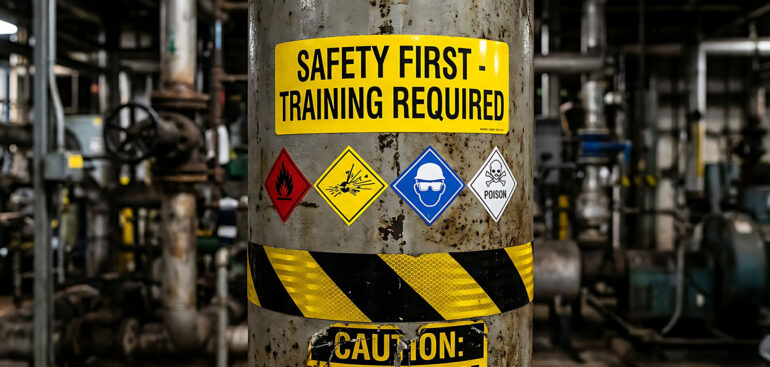
Plant safety signage

From Compliance to Competitive Advantage: Why the plants with the cleanest audit records aren’t the ones with the thickest binders — they’re the ones with the simplest systems.

Every plant manager has seen it: a binder thick enough to prop open a door, a safety program that checks every regulatory box, and an incident report that still lands on the desk Monday morning. Compliance was never the problem. Execution was.

That gap — between what a program says on paper and what actually happens on the floor — is where people and communities are put at risk. And closing it has less to do with adding more procedures than with subtracting the friction that keeps people from following strong procedures.

It’s a lesson Brainerd Chemical Company has built its operating philosophy around. The company’s internal safety motto, B-Safe: Success by Purpose, treats safety as a discipline practiced across every shift — not a binder updated before inspections. As an ACD-recognized Responsible Distributor, Brainerd operates with the expectation that every employee can stop, review, and improve any process they believe can be made safer. That’s a cultural posture, not a compliance checkbox.

Compliance Is the Starting Line, Not the Finish

OSHA’s Process Safety Management standard, EPA’s Risk Management Program, and DOT’s hazmat rules set a floor, not a ceiling. A facility can pass every inspection, file every SDS correctly, and still carry serious operational risk — because the things that cause incidents usually aren’t the things regulators measure.

Regulators measure whether a program exists. Plants live or die on whether it gets used consistently, across shifts, under pressure, on the day a new operator is covering for someone out sick. Those are different problems.

“Simplicity closes the gap between intent and execution. When procedures are clear and practical, they get followed—and that’s what prevents failures.” — Neil Morgan, Chief Operating Officer, Brainerd Chemical Company

A chemical safety program is the combined system of handling procedures, training, documentation, labeling, storage protocols, and emergency response planning that governs how a facility receives, stores, uses, and disposes of chemicals. Effective programs go beyond regulatory minimums by standardizing procedures across shifts, keeping training current with operational changes, and reducing the number of variables — different suppliers, different concentrations, different paperwork — that workers must reconcile in real time.

Where Real Gaps Open Up

When incidents get investigated honestly, the same handful of issues tend to surface. None of them show up in a compliance audit.

  • Procedures drift between shifts. Day shift does it one way, night shift another. Both believe they’re doing it right.
  • Training ages faster than operations. A line gets modified in March; the training module gets updated in October — if at all.
  • Documentation lags behind the work. SDS files, labels, and rack locations stop matching what’s actually on site after a few supplier changes.
  • Variability creeps in through procurement. Three suppliers, three slightly different product specs, three sets of handling quirks — and one operator trying to keep them straight.
  • Emergency response stays theoretical. Drills happen; the specific neighbor-to-neighbor, valve-to-valve knowledge required during an actual release often doesn’t.

Individually, none of these looks like a crisis. Stacked together, they explain most of what goes wrong.

Simpler Systems Beat Thicker Binders

The safest operations tend to share a trait that surprises people: their safety programs are leaner, not larger. Fewer suppliers. Fewer product variations. Fewer one-off handling procedures that only two people on site actually remember.

That simplicity isn’t laziness — it’s design. Every variable removed from a worker’s cognitive load is a variable that can’t trip them up at 2 a.m. A plant receiving the same product, from the same supplier, in the same packaging configuration, with the same SDS and the same delivery protocol, has one thing to train on. A plant juggling four versions of roughly the same chemical has four things to train on — and four chances to get it wrong.

When safety is easier to follow, it gets followed. That’s not a slogan — it’s what the incident data keeps telling us.

Chemical safety programs improve when facilities reduce operational variability. Standardizing on consistent product specifications, a stable supplier base, and uniform documentation across sites lowers the number of judgment calls workers must make during routine tasks — which is where most handling errors originate. Operations leaders who treat supplier consolidation as a safety strategy, not just a procurement one, consistently see fewer near-misses, faster onboarding, and more reliable audit outcomes.

Where a Supplier Actually Helps — and Where They Don’t

Most chemical suppliers will tell you they support safety. The question worth asking is what that support looks like the week before an audit, or the afternoon a driver calls in with a placarding question, or the quarter a new product line gets added.

Practical supplier support tends to show up in specific places:

  • Current, accurate SDS delivered before the product arrives — not chased down after.
  • Consistent product specifications shipment to shipment, so handling procedures don’t need to be re-validated with every lot.
  • Drivers and logistics personnel trained to DOT hazmat standards as a baseline, not as a differentiator.
  • Regulatory guidance that arrives before a rule changes — not six months after a customer gets cited.
  • A single point of contact who knows the account, the site, and the products on it.

None of that is glamorous. All of it compounds. A supplier who gets the unglamorous things right is a supplier who isn’t generating extra work for your EHS team — and reducing the load on EHS is one of the most underrated risk-reduction moves in the industry.

“Our customers don’t call us when things are easy. They call us when a rule is changing, a spec is shifting, or a driver needs an answer at 4 p.m. on a Friday. That’s the moment our value shows up. We build the relationship for those moments, not the quiet ones.” — Jason Jacobus, Chief Commercial Officer, Brainerd Chemical Company

How Brainerd Chemical Shows Up in the Real World

The practical version of “safety as a partnership” is less about posters on a breakroom wall and more about the operating habits of the supplier on the other end of the phone. A few of the places that plays out day to day:

  • ACD Responsible Distributor certification, meaning Brainerd is independently audited against one of the most rigorous health, safety, security, and environmental programs in chemical distribution.
  • Drivers and logistics personnel trained to DOT hazmat standards, with consistent placarding, documentation, and handling from origin to delivery.
  • Bulk storage and multimodal logistics infrastructure sized to absorb seasonal demand spikes — so customers aren’t scrambling to re-qualify backup suppliers mid-season.
  • A single account contact who knows the site, the products, the preferred delivery windows, and the regulatory context the customer is operating inside.

Proactive regulatory communication — giving customers a heads-up on rule changes before they become audit findings.

The common thread: absorbing complexity on the supplier side so the plant doesn’t have to carry it. That’s what the B-Safe culture looks like from the customer’s chair.

What This Looks Like in Practice

Plants that move safety from a compliance function to an operational strength tend to follow a similar path. They consolidate suppliers where it makes sense. They standardize documentation formats across sites so an auditor walking into the Houston facility sees the same structure as one walking into the Midwest plant. They rebuild training around the actual sequence of tasks workers perform, not the regulatory categories the tasks fall under. And they treat every supplier relationship as a safety relationship first.

The payoff isn’t just a cleaner audit. It’s fewer late-night phone calls, faster new-hire ramp-up, lower insurance posture, and — more than anything — predictability. Operations leaders who have lived through a serious incident will tell you: predictability is the whole game.

Quick Takeaways

  • Compliance is a floor, not a ceiling. Passing an audit is not the same as controlling risk.
  • Most incidents trace back to variability — between shifts, between suppliers, between what’s documented and what’s practiced.
  • Simpler systems are safer systems. Fewer suppliers, consistent specs, and uniform documentation reduce the cognitive load that causes errors.
  • The right supplier reduces your EHS workload. Accurate SDS, consistent product, trained drivers, and proactive regulatory guidance are safety contributions — not just service features.
  • Predictability is the competitive advantage. Plants that treat safety as an operational discipline, not a paperwork exercise, run cleaner, faster, and with less management overhead.

About Brainerd Chemical Company

Brainerd Chemical Company is a U.S.-based manufacturer and distributor of specialty and commodity chemicals serving agriculture, water treatment, energy, and industrial markets nationwide, with integrated packaging, logistics, and regulatory compliance capabilities. As an ACD Responsible Distributor, Brainerd operates under its B-Safe: Success by Purpose culture — a commitment to safely supplying the solutions customers need, the expertise they value, and the reliability they depend on, every day.

Phone: +1 (918) 622-1214     Web: www.BrainerdChemical.com

Sodium Hydroxide: The Chemical You Use Everywhere

Sodium hydroxide—caustic soda—is one of the most widely used industrial chemicals for a reason: it works.
In food and beverage, it’s the backbone of CIP cleaning—breaking down fats, proteins, and residues that other chemistries can’t fully remove. In water treatment, it controls pH, neutralizes waste streams, and helps remove heavy metals. Across manufacturing, it supports everything from degreasing to refining.
It’s not a specialty product. It’s a staple. Which makes how you source it just as important as how you use it. Inconsistent concentration, delayed delivery, or gaps in supply don’t show up as minor issues—they show up as downtime, failed cleaning cycles, or compliance risk.
Brainerd Chemical supplies sodium hydroxide—straight caustic or custom blends—with a focus on what operations actually need:
• Consistent concentration and quality you can rely on across every delivery
• Bulk supply and flexible delivery aligned to your schedule—not the supplier’s
• Integrated logistics that reduce handoffs and supply chain variability

Because when a commodity chemical is critical to your operation, the risk isn’t the chemistry—it’s the supply.
If caustic is core to your process, your supply partner should remove uncertainty—not add to it.

About Brainerd Chemical Company

Brainerd Chemical Company is a U.S.-based manufacturer and distributor of specialty and commodity chemicals serving agriculture, water treatment, energy, and industrial markets nationwide, with integrated packaging, logistics, and regulatory compliance capabilities.

 Media Inquiries

Brainerd Chemical Company

📞 +1 (918) 622-1214

🌐 www.BrainerdChemical.com

When Nitric Acid Gets Tight, Your Supply Chain Is the Story

Reliability doesn’t get much attention—until it’s the only thing that matters.

A fertilizer blender in the mid-continent starts moving through inventory faster than planned. Spring demand arrives early, ammonia tightens, and two Gulf Coast plants go down without warning. One supplier pushes deliveries out two weeks; another can’t confirm volume at all.

This isn’t a one-off scenario—it’s been playing out repeatedly over the past 18 months. And the companies that stayed on track weren’t the ones chasing the lowest price, they were the ones aligned with the right supplier.

A Supply Chain That Looks Stable—Until It Isn’t

Nitric acid (HNO₃) sits at the center of several critical industries: fertilizer production, mining and explosives, nylon intermediates, and specialty chemicals. On paper, supply can appear steady.

In reality, it’s tightly linked to ammonia—and ammonia is tied to natural gas. When one shifts, everything downstream follows.

You don’t need a prolonged disruption to feel it. A short-term spike in gas prices, an ammonia plant outage, or a weather event along the Gulf Coast can tighten nitric acid availability quickly. When that happens, buyers aren’t just managing costs they’re competing for supply.

And when supply compresses, the cracks show up fast, especially for those relying on thin or fragmented sourcing strategies.

Where the Pressure Builds

Nitric acid supply disruptions don’t emerge from a single cause. They tend to stack along three pressure points:

  • Feedstock volatility. Ammonia production is energy intensive. When natural gas supply tightens, costs rise—and in some cases, output drops.
  • Production concentration. Much of North American nitric acid capacity sits along the Gulf Coast. A handful of outages—planned or not—can ripple across the market.
  • Tariff and trade dynamics. Tariffs and sourcing changes can push more demand toward domestic producers at exactly the wrong time.

None of this is new. What’s changed is how often these factors overlap—and how quickly conditions can move from balanced to constrained. Supply events of 2024 and 2025 weren’t isolated incidents—they were a preview of the operating environment that buyers should expect going forward.

Where Procurement Processes Break Down

In stable markets, most procurement strategies work fine: annual contracts, price-based decisions, logistics handled as needed.

That model holds—until it doesn’t.

The gaps tend to surface in predictable places. A supplier without dedicated bulk storage can’t buffer against a short-duration outage—the disruption passes straight through to the customer. A supplier without its own transportation infrastructure is at the mercy of carrier availability at exactly the moment when every other buyer is competing for the same trucks. A supplier without diversified sourcing has no fallback when its primary producer declares force majeure.

These aren’t edge cases. They’re the scenarios that define whether a distribution relationship provides real value or just handles orders when conditions are easy.

Why Infrastructure Matters More Than Price

Handling nitric acid safely—and delivering it consistently—takes more than capacity on paper. It requires purpose-built systems, trained personnel, and a level of operational discipline that holds up under pressure. This is a tightly regulated, unforgiving product. There’s no margin for improvisation.

For buyers, that shifts the evaluation. This isn’t just a pricing decision—it’s operational due diligence. Where suppliers separate themselves is in how they answer a few practical questions:

  • Can they buffer short-term disruptions without interrupting your supply?
  • Do they control their own transportation, or depend on the spot market?
  • Are they sourcing from multiple producers—or exposed to a single point of failure?
  • Do they operate with the same rigor in a constrained market as they do in a stable one?

Brainerd Chemical is built around those answers. Bulk storage, company-owned hazmat transportation, diversified sourcing, and a compliance-first operating model aren’t extras—they’re the baseline.

Dedicated infrastructure for corrosive acids, trained drivers, and controlled logistics provide consistency when conditions tighten. Diversified sourcing reduces dependency risk. And with OSHA-aligned procedures, SDS protocols, secondary containment, and emergency response planning in place, operations don’t change when the market does.

Build the Relationship Before You Need It

When supply tightens, there’s no time to rethink your approach. The companies that maintain continuity aren’t reacting in the moment—they’ve already aligned with partners who can carry the load.

The nitric acid market has shown, more than once, how quickly conditions can change.

The real question isn’t whether it will happen again. It’s whether your supply chain is built to handle it when it does.

Talk to Brainerd about nitric acid supply, logistics, and sourcing continuity: Brainerdchemical.com/getstartednow

When Off-the-Shelf Chemistry Fails

Standard supply doesn’t solve specialized processes. A capable blending partner does.

At a certain point, standard chemical supply stops aligning with operational reality. Required concentrations fall outside commercially available ranges. Internal formulations, developed over time to meet specific process needs, become increasingly expensive or complex to produce in-house. In regulated environments, certification requirements or performance tolerances further narrow the set of viable options.

These conditions are not edge cases. They are common across water treatment, oil and gas, food processing, and metal manufacturing—industries where process requirements rarely conform to standardized supply.

In these situations, limitation is not availability. It is fit.

Custom and Contract Blending Serve Different Roles

Blending services are often grouped together, but the distinction between models is operationally significant.

Custom blending is typically applied when a formulation does not yet exist in its required form. A blending partner develops the product to meet defined performance specifications—such as concentration thresholds, compatibility requirements, or inhibitor inclusion—often beginning with lab-scale validation before scaling to production.

Contract, or toll blending, applies when the formulation is already established. In this model, production is outsourced while the customer retains ownership of the formula. The blending partner assumes responsibility for manufacturing, quality control, and delivery.

Both approaches shift production from a fixed-cost structure to a variable one, aligning output with demand and reducing the burden of maintaining in-house blending infrastructure.

Capability Gaps Define Risk

The variability between blending facilities is often underestimated. While capabilities may appear comparable at a high level, differences become more pronounced when hazardous materials or regulated applications are involved.

Facilities configured for non-hazardous blending may lack the infrastructure, containment systems, or certified personnel required to safely handle concentrated acids, oxidizers, or caustics. In these cases, the risk extends beyond the blender—it transfers to the purchasing organization.

Similarly, certification requirements must be evaluated at the application level. FDA or NSF credentials, for example, are necessary for food-grade products, while NSF/ANSI/CAN 60 compliance applies to many water treatment applications. OMRI listing may be required in agricultural contexts. The presence of a certification alone is insufficient; its relevance to the intended use is what determines compliance.

Operational flexibility is another differentiator. Facilities optimized for large-scale production may struggle to accommodate variable demand or smaller batch requirements, creating inefficiencies for customers with fluctuating volumes.

Logistics, often treated as a separate function, also plays a role in overall system reliability. The introduction of third-party carriers can add variability in handling and documentation, particularly for regulated or hazardous materials. Why Brainerd Chemical

Brainerd Chemical was built to handle the kind of complexity that standard blending operations often avoid. Across six facilities, the company supports both hazardous and non-hazardous blending with a level of capability designed for high-demand industrial applications.

Operators are certified to work with some of the most challenging chemistries in use today, including high concentrations of nitric acid, hydrofluoric acid, sulfuric acid, Formaldehyde, sodium hydroxide, custom PAA formulations, and many others. This range is not typical—and it reflects a deliberate focus on supporting customers whose requirements extend beyond standard supply.

From an operational standpoint, the infrastructure is built for both scale and flexibility. With more than 50 large-capacity tanks, batch sizes ranging from 330 to 40,000 gallons, and over 167,000 square feet of warehouse space, the system is designed to accommodate both specialized runs and high-volume production. Custom formulation and toll manufacturing are supported within the same environment, alongside blending programs that meet EPA, NSF, FDA, and OMRI standards.

What distinguishes the model further is end-to-end control. Brainerd operates its own transportation fleet, with DOT-certified drivers and company-owned equipment. That eliminates the need for third-party handoffs, reducing variability and strengthening compliance throughout the supply chain. For customers requiring private labeling, blind shipment, or customized packaging, those capabilities are integrated into the same operation—managed by a single accountable partner.

Reassessing the Blending Model

As process requirements evolve, the limitations of standard supply models become more apparent. In many cases, the decision is less about sourcing a different product and more about restructuring how that product is produced and delivered.

Blending, when aligned with operational needs, becomes less of a constraint—and more of a system that supports scale, compliance, and cost control.

Why Brainerd

Brainerd Chemical is built for the complexity most blenders avoid.

Across six facilities, Brainerd supports both hazardous and non-hazardous blending with certified capability across high-demand chemistries—including nitric acid, hydrofluoric acid, sulfuric acid, Formaldehyde, sodium hydroxide, custom PAA formulations, and many others.

The operation is designed for both scale and flexibility, with batch sizes ranging from 330 to 40,000 gallons and infrastructure that supports custom formulation and toll manufacturing within the same system.

What sets it apart is control. Brainerd operates its own transportation fleet, eliminating third-party handoffs and maintaining chain-of-custody from production to delivery.

For customers requiring private labeling, blind shipment, or specialized packaging, those capabilities are built in—not bolted on.

Fix the Constraint

If blending is driving cost, limiting throughput, or increasing risk, it’s time to change the model.

The right partner doesn’t just produce chemicals. They remove friction from your operation.

Talk to a Brainerd blending specialist:brainerdchemical.com/getstartednow

About Brainerd Chemical Company

Brainerd Chemical Company is a U.S.-based manufacturer and distributor of specialty and commodity chemicals serving agriculture, water treatment, energy, and industrial markets nationwide, with integrated packaging, logistics, and regulatory compliance capabilities.

 Media Inquiries

Brainerd Chemical Company

📞 +1 (918) 622-1214

🌐 www.BrainerdChemical.com

Why the ICIS Top 100 Matters

In the chemical industry, reputation is built on performance, reliability, compliance and consistent stewardship across complex supply chains — not marketing language.

That’s why independent industry benchmarks matter.

The ICIS Top 100 Chemical Distributors ranking, published by ICIS Chemical Business, evaluates distributors globally based on revenue scale, market reach, and industry impact. ICIS tracks global chemical markets in over 120 countries. Inclusion signals more than size — it reflects operational discipline, regulatory alignment, and sustained market relevance in a highly scrutinized industry.

For customers operating in time-sensitive markets such as agriculture, water treatment, energy, and manufacturing, chemical supplier stability is not optional. Reliability directly influences regulatory compliance, operational uptime, and total cost control.

As Jason Jacobus, Vice President, Business Development at Brainerd Chemical, explains: Brainerd Chemical Company’s recognition in the ICIS Top 100 chemical distributors reflects the strength of our safety culture, our people, and our operational discipline. In markets where disruption has real consequences, reliability is not optional.”

In today’s environment—where supply chain volatility, sustainability expectations, and regulatory complexity continue to intensify—independent, third-party benchmarking provides an objective measure of market presence and operational capability. As Joseph Chang, Global Editor of ICIS Chemical Business, observed, “Tariff uncertainty and resulting macroeconomic volatility has been the key theme this year, creating an environment where chemical distributors can demonstrate their value to both suppliers and customers.” Scale alone is insufficient; it must be matched by stewardship, logistics expertise, and disciplined long-term partnership execution. Industry benchmarks do not define a company’s values; rather, they provide evidence of whether those values translate into consistent, measurable performance.

About Brainerd Chemical Company

Brainerd Chemical Company is a U.S.-based manufacturer and distributor of specialty and commodity chemicals serving agriculture, water treatment, energy, and industrial markets nationwide, with integrated packaging, logistics, and regulatory compliance capabilities.

 Media Inquiries

Brainerd Chemical Company

📞 +1 (918) 622-1214

🌐 www.BrainerdChemical.com