
The New Competition for Chemicals

How America’s manufacturing resurgence is changing the way chemical buyers think about supply chain resilience.

If you’ve been following industrial development across the United States, you’ve likely noticed the pace of expansion accelerating.

New semiconductor facilities. Battery plants. Data centers. Advanced manufacturing campuses.

Across the country, major investments in domestic manufacturing are increasing demand for the chemicals that keep modern industry running.

Hydrofluoric acid. Nitric acid. Sulfuric acid. Sodium hydroxide. Water treatment chemistries. Specialty process chemicals.

Demand is growing across the board. For chemical buyers and operations leaders, the question isn’t whether demand is increasing—it’s whether supply chains are prepared to keep pace.

What does manufacturing expansion mean for chemical supply chains? Supply chain resilience is the ability to maintain reliable access to critical materials despite fluctuations in demand, transportation disruptions, market volatility, or supplier constraints. For chemical buyers, that means dependable supply, flexible packaging options, reliable logistics networks, and suppliers capable of supporting long-term growth.

New Facilities, New Demand

The semiconductor industry is one of the most visible examples. As new fabrication facilities come online across the United States, demand is increasing for the chemicals used to clean wafers, etch circuits, treat water, manage waste streams, and support production processes.

In many cases, these industries aren’t competing for the exact same chemical products—but they are competing for the same manufacturing capacity, transportation resources, packaging assets, and distribution networks. Many similar chemistries are used by:

  • Water treatment facilities
  • Industrial manufacturers
  • Agricultural operations
  • Energy producers
  • Metal processors

That’s why semiconductor growth matters to far more than semiconductor manufacturers.

The Questions Buyers Are Asking

Most procurement and operations teams have experienced some form of supply chain disruption over the past several years.

Extended lead times.

Transportation delays.

Packaging shortages.

Unexpected demand spikes.

The result is often the same: A delayed railcar. A missed delivery window. A production schedule that suddenly needs to be adjusted. Small disruptions can create outsized consequences when critical materials aren’t available when they’re needed.

As demand grows, these are the conversations happening in procurement offices and operations meetings across the country:

  • Can our supplier support future growth?
  • Do they have packaging flexibility?
  • How resilient is their logistics network?
  • Do they have multiple sourcing options?
  • Can they maintain supply during periods of increased demand?

Those questions are increasingly important as domestic manufacturing capacity continues to expand.

Reliability Is Becoming a Competitive Advantage

Price will always matter. But if you’ve ever had a critical shipment delayed, you know the real cost of supply disruption often extends far beyond the purchase order.

A delayed shipment, unexpected shortage, or disruption in supply can quickly affect production schedules, inventory planning, customer commitments, and operating costs. That’s why manufacturers are placing greater emphasis on supplier capabilities, geographic reach, inventory strategies, packaging options, and transportation expertise.

In an environment where demand is growing, reliability becomes a competitive advantage.

Looking Ahead

America’s manufacturing resurgence is creating exciting opportunities across multiple industries. It is also reshaping chemical supply chains.

Organizations that understand how these changes affect sourcing, inventory planning, logistics, and supplier relationships will be better positioned to navigate future demand and support long-term growth. For chemical buyers, the conversation is becoming less about securing the lowest price and more about securing dependable access to the materials that keep operations moving.

As domestic manufacturing continues to grow, the organizations that invest in resilient supply chains today will be better positioned to respond to future demand, manage disruption, and maintain a competitive advantage. 

About Brainerd Chemical Company

Brainerd Chemical Company is a leading North American manufacturer, distributor, packager, and logistics provider of specialty and commodity chemicals. Through chemical manufacturing, custom packaging, private-label programs, contract packaging, and supply chain support, Brainerd helps customers operate safely, maintain compliance, and keep critical operations moving.

Media Inquiries

Brainerd Chemical Company

📞 +1 (918) 622-1214
🌐 www.BrainerdChemical.com

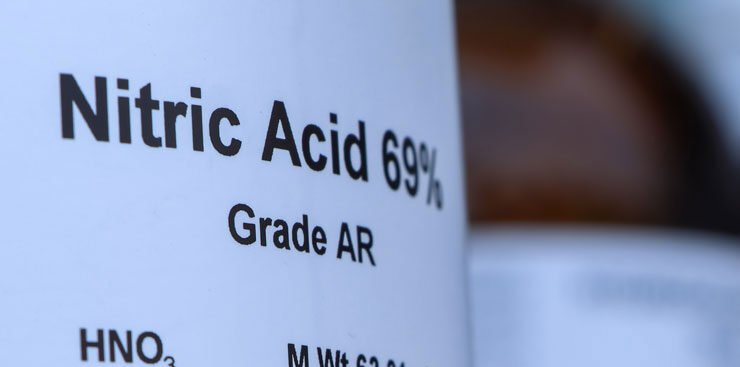
When Nitric Acid Gets Tight, Your Supply Chain Is the Story

Reliability doesn’t get much attention—until it’s the only thing that matters.

A fertilizer blender in the mid-continent starts moving through inventory faster than planned. Spring demand arrives early, ammonia tightens, and two Gulf Coast plants go down without warning. One supplier pushes deliveries out two weeks; another can’t confirm volume at all.

This isn’t a one-off scenario—it’s been playing out repeatedly over the past 18 months. And the companies that stayed on track weren’t the ones chasing the lowest price, they were the ones aligned with the right supplier.

A Supply Chain That Looks Stable—Until It Isn’t

Nitric acid (HNO₃) sits at the center of several critical industries: fertilizer production, mining and explosives, nylon intermediates, and specialty chemicals. On paper, supply can appear steady.

In reality, it’s tightly linked to ammonia—and ammonia is tied to natural gas. When one shifts, everything downstream follows.

You don’t need a prolonged disruption to feel it. A short-term spike in gas prices, an ammonia plant outage, or a weather event along the Gulf Coast can tighten nitric acid availability quickly. When that happens, buyers aren’t just managing costs they’re competing for supply.

And when supply compresses, the cracks show up fast, especially for those relying on thin or fragmented sourcing strategies.

Where the Pressure Builds

Nitric acid supply disruptions don’t emerge from a single cause. They tend to stack along three pressure points:

  • Feedstock volatility. Ammonia production is energy intensive. When natural gas supply tightens, costs rise—and in some cases, output drops.
  • Production concentration. Much of North American nitric acid capacity sits along the Gulf Coast. A handful of outages—planned or not—can ripple across the market.
  • Tariff and trade dynamics. Tariffs and sourcing changes can push more demand toward domestic producers at exactly the wrong time.

None of this is new. What’s changed is how often these factors overlap—and how quickly conditions can move from balanced to constrained. Supply events of 2024 and 2025 weren’t isolated incidents—they were a preview of the operating environment that buyers should expect going forward.

Where Procurement Processes Break Down

In stable markets, most procurement strategies work fine: annual contracts, price-based decisions, logistics handled as needed.

That model holds—until it doesn’t.

The gaps tend to surface in predictable places. A supplier without dedicated bulk storage can’t buffer against a short-duration outage—the disruption passes straight through to the customer. A supplier without its own transportation infrastructure is at the mercy of carrier availability at exactly the moment when every other buyer is competing for the same trucks. A supplier without diversified sourcing has no fallback when its primary producer declares force majeure.

These aren’t edge cases. They’re the scenarios that define whether a distribution relationship provides real value or just handles orders when conditions are easy.

Why Infrastructure Matters More Than Price

Handling nitric acid safely—and delivering it consistently—takes more than capacity on paper. It requires purpose-built systems, trained personnel, and a level of operational discipline that holds up under pressure. This is a tightly regulated, unforgiving product. There’s no margin for improvisation.

For buyers, that shifts the evaluation. This isn’t just a pricing decision—it’s operational due diligence. Where suppliers separate themselves is in how they answer a few practical questions:

  • Can they buffer short-term disruptions without interrupting your supply?
  • Do they control their own transportation, or depend on the spot market?
  • Are they sourcing from multiple producers—or exposed to a single point of failure?
  • Do they operate with the same rigor in a constrained market as they do in a stable one?

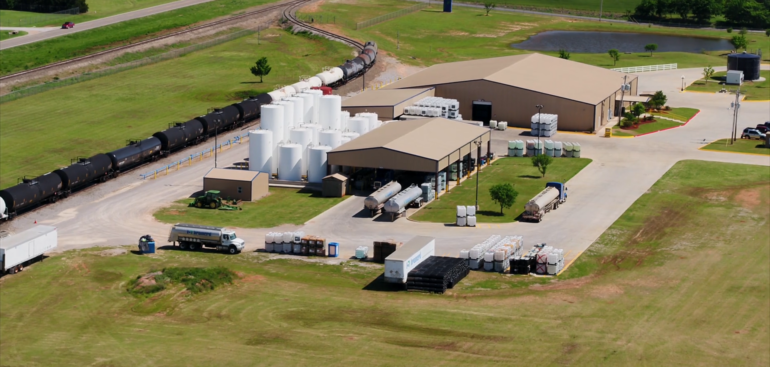
Brainerd Chemical is built around those answers. Bulk storage, company-owned hazmat transportation, diversified sourcing, and a compliance-first operating model aren’t extras—they’re the baseline.

Dedicated infrastructure for corrosive acids, trained drivers, and controlled logistics provide consistency when conditions tighten. Diversified sourcing reduces dependency risk. And with OSHA-aligned procedures, SDS protocols, secondary containment, and emergency response planning in place, operations don’t change when the market does.

Build the Relationship Before You Need It

When supply tightens, there’s no time to rethink your approach. The companies that maintain continuity aren’t reacting in the moment—they’ve already aligned with partners who can carry the load.

The nitric acid market has shown, more than once, how quickly conditions can change.

The real question isn’t whether it will happen again. It’s whether your supply chain is built to handle it when it does.

Talk to Brainerd about nitric acid supply, logistics, and sourcing continuity: Brainerdchemical.com/getstartednow

6 Core Acids. One Supply Partner.

Copper refined to high purity using several core industrial acids.

Brief: Discover how the right chemical partner for 6 core industrial acids safeguards workers, protects operations, and ensures process continuity.


Behind nearly every manufactured product, there is a chemical story. Fertilizers that feed the world’s crops, advanced ceramics that make electronics possible, specialty alloys used in aerospace — all of them depend on precise, reliable, and safe access to core industrial chemicals. In today’s environment of supply chain disruption and rising compliance demands, businesses need more than a supplier — they need a partner who delivers consistency, stewardship, and expertise.

Brainerd Chemical Company has built its reputation not simply as a supplier, but as a trusted technical partner. By combining one of the industry’s most comprehensive product offerings with stewardship-driven culture, nationwide logistics, and deep technical expertise, Brainerd supports industries that rely on safe and reliable supply to keep our nation moving forward.

Here’s how Brainerd Chemical helps you protect your supply chain integrity:

Nitric Acid (98+%)

A powerful oxidizer, nitric acid is essential for powder metals and ceramics. From surface treatment and metal finishing to precision applications in electronics and aerospace, Brainerd’s expertise ensures safe, compliant, and reliable supply.

Sulfuric Acid (1–93%)

The largest-volume industrial chemical in the U.S., sulfuric acid is used in fertilizers, refining, and water treatment. Brainerd offers multiple concentrations — all solutions below 80% are GFSI-certified for food contact, giving customers confidence in compliance and stewardship.

Hydrochloric Acid (HCl)

A strong, versatile acid used for cleaning, pickling, and pH control across industrial applications. With Brainerd’s nationwide network, customers can depend on secure supply even during periods of high demand.

Hydrofluoric Acid (49%, 70%)

A specialized acid vital to the semiconductor, glass, and specialty etching industries. Safe handling is critical — and Brainerd’s packaging and safety culture ensure reduced exposure risk for operators.

Phosphoric Acid (75% FG)

Available in food-grade and industrial-grade, phosphoric acid supports fertilizer production, food processing, and cleaning applications. Certified solutions help customers meet strict food industry standards.

Custom Mixed Acids

Not all applications fit neatly into a standard spec. Brainerd provides tailored acid blends to meet process-specific needs, from corrosion control to specialized production environments.

Why the Right Partner Matters

Industrial manufacturing is under pressure to deliver higher performance with lower risk, tighter safety standards, and stronger environmental stewardship. The difference between a transactional supplier and a technical partner can be the difference between success and failure.

Does your current supplier help safeguard your people, operations, and reputation? Brainerd Chemical does. Safety and reliability aren’t optional, they’re our foundation. We stand apart as a partner committed to powering your progress safely, sustainably, and consistently.

About Brainerd Chemical Company

Brainerd Chemical Company is a leading U.S. manufacturer and distributor of industrial acids and specialty chemicals. From sulfuric and nitric to hydrofluoric and hydrochloric, we supply the core acids that power energy, agriculture, water treatment, and manufacturing. Backed by decades of expertise, nationwide facilities, and a commitment to safety, Brainerd delivers the reliable supply chain solutions industries depend on every day.

DOT Concentrated Nitric Acid Special Permit Renewed

FOR IMMEDIATE RELEASE. Washington, D.C., March 7, 2023 – Brainerd Chemical Company, a leading provider of chemical blending, packaging, and transportation services, is proud to announce the fifth renewal of its special permit DOT-SP 14635 by the U.S. Department of Transportation.

This significant milestone reaffirms Brainerd’s commitment to safety and compliance in the handling and transportation of hazardous materials.

DOT-SP 14635 permit allows Brainerd to ship drums of concentrated nitric acid on traditional common carriers along with other freight, a practice not commonly permitted due to the hazardous nature of this chemical. With this renewal, Brainerd Chemical Company continues to be one of the few companies in North America drumming concentrated nitric acid, demonstrating the company’s unique capabilities and reputation for adhering to rigorous safety standards.

“This 5th renewal of our special permit underscores our commitment to giving customers the resources to better manage their supply chain needs.”

Brian Miller, President of Brainerd Chemical Company

Brainerd Chemical Company is committed to innovation with a focus on responsible stewardship. Which is why they pursued this leading packaging technology. When in use, this package design incorporates specialized connectivity for minimal exposure to human contact creating safer solutions to meet the diverse needs of its customers.

The special permit is based on rigorous safety standards and protocols established by the Department of Transportation, ensuring that hazardous materials are transported safely and effectively. The renewal process involves a thorough review of the company’s safety records and operational procedures, reaffirming Brainerd’s commitment to maintaining the highest standards in the industry.

For more information about Brainerd Chemical Company and its services, please visit brainerdchemical.com.

ABOUT BRAINERD CHEMICAL COMPANY

Brainerd Chemical Company, Inc., based in Tulsa, OK, is a premier provider of chemical products, blending, packaging, and transportation services and recognized as a top 100 U.S. Chemical distributor.

MEDIA INQUIRIES

1.918.622.1214

@Brainerd Chemical Company

SOURCE:  U.S. Department of Transportation Pipeline and Hazardous Materials Safety Administration DOT-SP 14635 (FIFTH REVISION)