
When Nitric Acid Gets Tight, Your Supply Chain Is the Story

Reliability doesn’t get much attention—until it’s the only thing that matters.

A fertilizer blender in the mid-continent starts moving through inventory faster than planned. Spring demand arrives early, ammonia tightens, and two Gulf Coast plants go down without warning. One supplier pushes deliveries out two weeks; another can’t confirm volume at all.

This isn’t a one-off scenario—it’s been playing out repeatedly over the past 18 months. And the companies that stayed on track weren’t the ones chasing the lowest price, they were the ones aligned with the right supplier.

A Supply Chain That Looks Stable—Until It Isn’t

Nitric acid (HNO₃) sits at the center of several critical industries: fertilizer production, mining and explosives, nylon intermediates, and specialty chemicals. On paper, supply can appear steady.

In reality, it’s tightly linked to ammonia—and ammonia is tied to natural gas. When one shifts, everything downstream follows.

You don’t need a prolonged disruption to feel it. A short-term spike in gas prices, an ammonia plant outage, or a weather event along the Gulf Coast can tighten nitric acid availability quickly. When that happens, buyers aren’t just managing costs they’re competing for supply.

And when supply compresses, the cracks show up fast, especially for those relying on thin or fragmented sourcing strategies.

Where the Pressure Builds

Nitric acid supply disruptions don’t emerge from a single cause. They tend to stack along three pressure points:

  • Feedstock volatility. Ammonia production is energy intensive. When natural gas supply tightens, costs rise—and in some cases, output drops.
  • Production concentration. Much of North American nitric acid capacity sits along the Gulf Coast. A handful of outages—planned or not—can ripple across the market.
  • Tariff and trade dynamics. Tariffs and sourcing changes can push more demand toward domestic producers at exactly the wrong time.

None of this is new. What’s changed is how often these factors overlap—and how quickly conditions can move from balanced to constrained. Supply events of 2024 and 2025 weren’t isolated incidents—they were a preview of the operating environment that buyers should expect going forward.

Where Procurement Processes Break Down

In stable markets, most procurement strategies work fine: annual contracts, price-based decisions, logistics handled as needed.

That model holds—until it doesn’t.

The gaps tend to surface in predictable places. A supplier without dedicated bulk storage can’t buffer against a short-duration outage—the disruption passes straight through to the customer. A supplier without its own transportation infrastructure is at the mercy of carrier availability at exactly the moment when every other buyer is competing for the same trucks. A supplier without diversified sourcing has no fallback when its primary producer declares force majeure.

These aren’t edge cases. They’re the scenarios that define whether a distribution relationship provides real value or just handles orders when conditions are easy.

Why Infrastructure Matters More Than Price

Handling nitric acid safely—and delivering it consistently—takes more than capacity on paper. It requires purpose-built systems, trained personnel, and a level of operational discipline that holds up under pressure. This is a tightly regulated, unforgiving product. There’s no margin for improvisation.

For buyers, that shifts the evaluation. This isn’t just a pricing decision—it’s operational due diligence. Where suppliers separate themselves is in how they answer a few practical questions:

  • Can they buffer short-term disruptions without interrupting your supply?
  • Do they control their own transportation, or depend on the spot market?
  • Are they sourcing from multiple producers—or exposed to a single point of failure?
  • Do they operate with the same rigor in a constrained market as they do in a stable one?

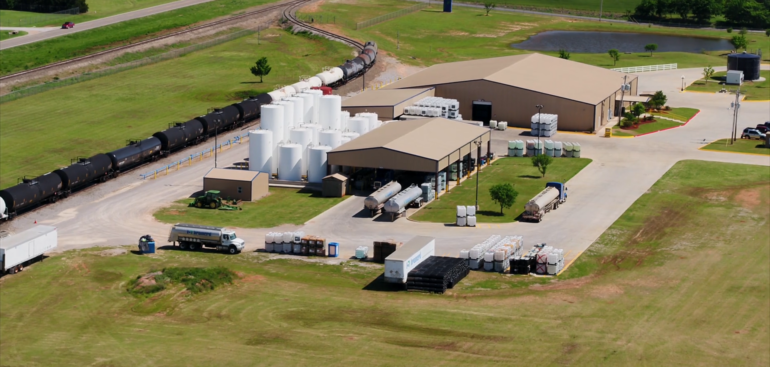
Brainerd Chemical is built around those answers. Bulk storage, company-owned hazmat transportation, diversified sourcing, and a compliance-first operating model aren’t extras—they’re the baseline.

Dedicated infrastructure for corrosive acids, trained drivers, and controlled logistics provide consistency when conditions tighten. Diversified sourcing reduces dependency risk. And with OSHA-aligned procedures, SDS protocols, secondary containment, and emergency response planning in place, operations don’t change when the market does.

Build the Relationship Before You Need It

When supply tightens, there’s no time to rethink your approach. The companies that maintain continuity aren’t reacting in the moment—they’ve already aligned with partners who can carry the load.

The nitric acid market has shown, more than once, how quickly conditions can change.

The real question isn’t whether it will happen again. It’s whether your supply chain is built to handle it when it does.

Talk to Brainerd about nitric acid supply, logistics, and sourcing continuity: Brainerdchemical.com/getstartednow

When Off-the-Shelf Chemistry Fails

Standard supply doesn’t solve specialized processes. A capable blending partner does.

At a certain point, standard chemical supply stops aligning with operational reality. Required concentrations fall outside commercially available ranges. Internal formulations, developed over time to meet specific process needs, become increasingly expensive or complex to produce in-house. In regulated environments, certification requirements or performance tolerances further narrow the set of viable options.

These conditions are not edge cases. They are common across water treatment, oil and gas, food processing, and metal manufacturing—industries where process requirements rarely conform to standardized supply.

In these situations, limitation is not availability. It is fit.

Custom and Contract Blending Serve Different Roles

Blending services are often grouped together, but the distinction between models is operationally significant.

Custom blending is typically applied when a formulation does not yet exist in its required form. A blending partner develops the product to meet defined performance specifications—such as concentration thresholds, compatibility requirements, or inhibitor inclusion—often beginning with lab-scale validation before scaling to production.

Contract, or toll blending, applies when the formulation is already established. In this model, production is outsourced while the customer retains ownership of the formula. The blending partner assumes responsibility for manufacturing, quality control, and delivery.

Both approaches shift production from a fixed-cost structure to a variable one, aligning output with demand and reducing the burden of maintaining in-house blending infrastructure.

Capability Gaps Define Risk

The variability between blending facilities is often underestimated. While capabilities may appear comparable at a high level, differences become more pronounced when hazardous materials or regulated applications are involved.

Facilities configured for non-hazardous blending may lack the infrastructure, containment systems, or certified personnel required to safely handle concentrated acids, oxidizers, or caustics. In these cases, the risk extends beyond the blender—it transfers to the purchasing organization.

Similarly, certification requirements must be evaluated at the application level. FDA or NSF credentials, for example, are necessary for food-grade products, while NSF/ANSI/CAN 60 compliance applies to many water treatment applications. OMRI listing may be required in agricultural contexts. The presence of a certification alone is insufficient; its relevance to the intended use is what determines compliance.

Operational flexibility is another differentiator. Facilities optimized for large-scale production may struggle to accommodate variable demand or smaller batch requirements, creating inefficiencies for customers with fluctuating volumes.

Logistics, often treated as a separate function, also plays a role in overall system reliability. The introduction of third-party carriers can add variability in handling and documentation, particularly for regulated or hazardous materials. Why Brainerd Chemical

Brainerd Chemical was built to handle the kind of complexity that standard blending operations often avoid. Across six facilities, the company supports both hazardous and non-hazardous blending with a level of capability designed for high-demand industrial applications.

Operators are certified to work with some of the most challenging chemistries in use today, including high concentrations of nitric acid, hydrofluoric acid, sulfuric acid, Formaldehyde, sodium hydroxide, custom PAA formulations, and many others. This range is not typical—and it reflects a deliberate focus on supporting customers whose requirements extend beyond standard supply.

From an operational standpoint, the infrastructure is built for both scale and flexibility. With more than 50 large-capacity tanks, batch sizes ranging from 330 to 40,000 gallons, and over 167,000 square feet of warehouse space, the system is designed to accommodate both specialized runs and high-volume production. Custom formulation and toll manufacturing are supported within the same environment, alongside blending programs that meet EPA, NSF, FDA, and OMRI standards.

What distinguishes the model further is end-to-end control. Brainerd operates its own transportation fleet, with DOT-certified drivers and company-owned equipment. That eliminates the need for third-party handoffs, reducing variability and strengthening compliance throughout the supply chain. For customers requiring private labeling, blind shipment, or customized packaging, those capabilities are integrated into the same operation—managed by a single accountable partner.

Reassessing the Blending Model

As process requirements evolve, the limitations of standard supply models become more apparent. In many cases, the decision is less about sourcing a different product and more about restructuring how that product is produced and delivered.

Blending, when aligned with operational needs, becomes less of a constraint—and more of a system that supports scale, compliance, and cost control.

Why Brainerd

Brainerd Chemical is built for the complexity most blenders avoid.

Across six facilities, Brainerd supports both hazardous and non-hazardous blending with certified capability across high-demand chemistries—including nitric acid, hydrofluoric acid, sulfuric acid, Formaldehyde, sodium hydroxide, custom PAA formulations, and many others.

The operation is designed for both scale and flexibility, with batch sizes ranging from 330 to 40,000 gallons and infrastructure that supports custom formulation and toll manufacturing within the same system.

What sets it apart is control. Brainerd operates its own transportation fleet, eliminating third-party handoffs and maintaining chain-of-custody from production to delivery.

For customers requiring private labeling, blind shipment, or specialized packaging, those capabilities are built in—not bolted on.

Fix the Constraint

If blending is driving cost, limiting throughput, or increasing risk, it’s time to change the model.

The right partner doesn’t just produce chemicals. They remove friction from your operation.

Talk to a Brainerd blending specialist:brainerdchemical.com/getstartednow

About Brainerd Chemical Company

Brainerd Chemical Company is a U.S.-based manufacturer and distributor of specialty and commodity chemicals serving agriculture, water treatment, energy, and industrial markets nationwide, with integrated packaging, logistics, and regulatory compliance capabilities.

 Media Inquiries

Brainerd Chemical Company

📞 +1 (918) 622-1214

🌐 www.BrainerdChemical.com

Sulfuric Acid Powers Agriculture

5 Reasons Wastewater Plants are Switching to PAA in 2026

BRIEF: Sulfuric acid (H₂SO₄) is among the highest-volume industrial chemicals produced globally and serves as a critical input in phosphate fertilizer manufacturing. In North America, the phosphate fertilizer industry accounts for approximately 50% of all sulfuric acid demand, indicating that fertilizer production is the largest regional application segment. This article reviews the chemical basis of sulfuric acid’s role in fertilizer production, examines sustainability implications, and discusses regulatory and supply chain factors shaping its distribution.

Sulfuric acid production is frequently used as an indicator of industrial activity due to its broad applications across refining, mining, metals processing, and agriculture. According to the U.S. Geological Survey (USGS), sulfuric acid remains one of the most produced chemicals in the United States, with the majority consumed in fertilizer manufacturing.

The Food and Agriculture Organization (FAO) has consistently emphasized that mineral fertilizers are central to global crop yield improvements and that sulfuric acid plays an indispensable chemical role.

Chemical Role in Phosphate Fertilizer Production

Sulfuric acid is used in the wet-process conversion of phosphate rock (fluorapatite) into phosphoric acid, the primary intermediate in phosphate fertilizer manufacturing. Phosphoric acid is subsequently neutralized with ammonia to produce major ammonium phosphate fertilizers, including monoammonium phosphate (MAP) and diammonium phosphate (DAP)—both of which are concentrated ammonium phosphates widely used for their high nutrient density and agronomic efficiency. Sulfuric acid is also integral to the production of single and triple superphosphates.

The reaction pathway enables industrial-scale conversion of insoluble phosphate rock into plant-available phosphorus. The International Fertilizer Association (IFA) reports that approximately 90% of mined phosphate rock is directed toward fertilizer production. Given this dependency, sulfuric acid supply is directly linked to phosphate fertilizer output.

Agricultural Productivity and Land Use Efficiency

Balanced nutrient management is strongly correlated with increased crop productivity. Peer-reviewed research and FAO assessments confirm that phosphorus fertilization plays a critical role in sustaining yields for cereals, oilseeds, and specialty crops.

Higher yields can reduce pressure for agricultural land expansion, supporting forest conservation and ecosystem preservation. Nutrient efficiency therefore has measurable sustainability implications.

Sulfur as a Secondary Nutrient

Declining atmospheric sulfur deposition — largely due to emission reductions under the U.S. Clean Air Act — has increased sulfur deficiencies in certain agricultural regions. Wet sulfate deposition, a key measure of atmospheric sulfur inputs, has declined by more than 80% over the past 35 years in many monitored U.S. regions compared to baseline periods, reflecting significant reductions in sulfur emissions.

Sulfur-containing fertilizers derived from sulfuric acid chemistry help restore soil balance and support amino acid formation and protein synthesis.

Research has documented improved yield response and enhanced seed protein concentration in oilseed crops grown on sulfur-deficient soils when sulfur fertilization is applied. As precision nutrient management advances, sulfur supplementation is increasingly recognized as an essential component of balanced fertilization programs.

Supply Chain Resilience and Strategic Infrastructure

Recent geopolitical disruptions and commodity market volatility have underscored the vulnerability of fertilizer supply chains. Because sulfuric acid production is frequently integrated with petroleum refining and non-ferrous metal smelting operations, upstream industrial shifts can influence fertilizer manufacturing capacity.

Within North America, regional chemical manufacturers and distributors play a stabilizing role in fertilizer supply chains by maintaining bulk storage capacity, multimodal transportation networks, and compliance-driven operating systems that help buffer seasonal demand fluctuations in agriculture. Companies such as Brainerd Chemical Company support supply continuity through diversified sourcing strategies, strategically located storage infrastructure, and specialized hazardous materials logistics expertise.

In fertilizer production cycles—where timing is closely aligned with planting windows—distribution partners with established rail access, bulk handling capacity, and compliance-driven operating systems can materially reduce supply volatility. As fertilizer markets remain sensitive to input disruptions, experienced chemical distributors increasingly serve as operational stabilizers within the broader agricultural value chain.

Safety, Compliance, and Stewardship

Handling sulfuric acid requires expertise. It is highly corrosive and demands rigorous safety protocols across the supply chain. Industry best practice requires demonstration of:

  • OSHA-compliant handling procedures
  • Trained personnel and certified operators
  • Secondary containment systems
  • Environmental compliance
  • Transparent Safety Data Sheets (SDS)
  • Emergency response planning

At Brainerd Chemical Company, sulfuric acid distribution is managed within a compliance-driven operational framework designed to meet and exceed these regulatory requirements. The company integrates trained hazardous materials personnel, bulk storage infrastructure with secondary containment systems, multimodal transportation planning, and documented safety protocols across its supply chain. Coordinated sourcing, rigorous documentation practices, and emergency preparedness planning reinforce operational reliability in time-sensitive markets such as fertilizer manufacturing.

By aligning hazardous materials logistics with federal and state regulatory standards, Brainerd Chemical Company exemplifies how disciplined stewardship, regulatory compliance, and industrial experience translate into safe, reliable chemical supply. In markets where timing, precision, and continuity are critical, safety performance is not simply a regulatory obligation — it is an operational imperative.

The Bigger Picture: Agriculture, Climate, and Supply Chain Resilience

Modern agriculture operates under mounting pressure. Global population growth continues to drive rising demand for food, feed, and fiber, while climate variability and soil stress challenge farmers’ ability to sustain consistent yields. At the same time, supply chain fragility — influenced by geopolitical disruption, energy market shifts, and transportation constraints — can quickly ripple through agricultural input markets.

Within this environment, sulfuric acid occupies a critical but often overlooked position. As a foundational component of phosphate fertilizer production, it directly influences nutrient availability at scale. When sulfuric acid supply is reliable, responsibly managed, and supported by disciplined logistics infrastructure, fertilizer manufacturing remains steady. Farmers can plan planting cycles with greater confidence, crop yields remain competitive, and food markets experience greater price stability.

Conversely, instability in sulfuric acid supply can cascade through fertilizer markets, increasing input costs and amplifying downstream food pricing pressure. These dynamics elevate sulfuric acid from a simple industrial commodity to a strategic infrastructure component of global food systems — linking industrial chemistry, agricultural productivity, and economic resilience in a tightly interconnected chain.

Building Trust Through Experience and Expertise

Customers reward performance. For fertilizer manufacturers and agricultural partners evaluating sulfuric acid suppliers, key questions include:

  • Does the supplier understand agricultural cycles?
  • Do they have redundant sourcing options?
  • What is their approach to risk management?
  • Can they scale with seasonal demand spikes?
  • Are safety and regulatory compliance non-negotiable priorities?
  • Do they invest in long-term partnerships rather than spot transactions?

Experience in acid handling, logistics coordination, regulatory oversight, and industrial customer service builds the kind of authority that cannot be manufactured overnight.

Brainerd’s operational footprint, hybrid distribution capabilities, and technical support infrastructure position it as a trusted partner for industries that sustain essential supply chains — including agriculture.

Final Thoughts

Sulfuric acid may never appear on a grocery store shelf. Yet its impact reaches every aisle.

By enabling phosphate fertilizer production, supporting efficient land use, and sustaining agricultural productivity, sulfuric acid plays a critical — if often unseen — role in global food security.

As global challenges intensify, the importance of responsible chemical manufacturing, safe distribution, and resilient supply partnerships only grows.

For industries that depend on precision, reliability, and stewardship, the right sulfuric acid partner is not just a vendor — it is part of the solution.

About Brainerd Chemical Company

Brainerd Chemical Company is a leading U.S. manufacturer and distributor of specialty and commodity chemicals. Our mission is simple yet powerful: to safely supply the solutions our customers need, the expertise they want, and the reliability they depend on—every single day.

Media Inquiries

Brainerd Chemical Company

📞 +1 (918) 622-1214

🌐 www.BrainerdChemical.com