
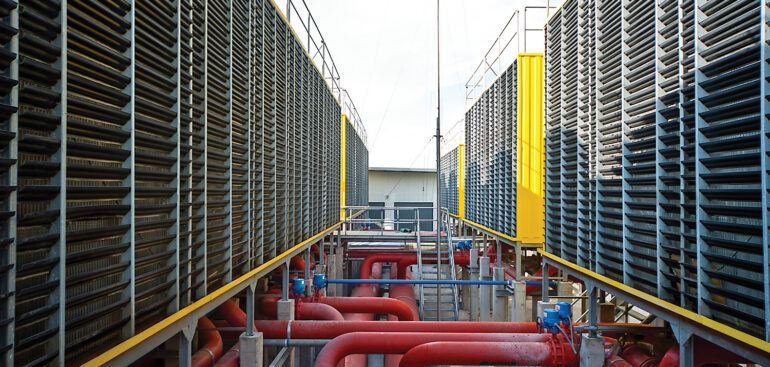
Data centers are becoming one of America’s largest water treatment challenges – Brainered Chemical has the solution.
Artificial intelligence is fueling a massive wave of data center construction across the United States. Most people focus on the servers, chips, and electricity required to power AI. Few realize another resource is becoming just as critical: Water.
Data centers generate enormous amounts of heat. Keeping those systems cool requires significant water resources—and effective water treatment.
According to research from Uptime Institute, water management has become a strategic consideration for data center operators, with cooling system design playing a central role in determining water consumption, sustainability performance, and long-term operational resilience.
As AI workloads continue to increase cooling demands, operators are under growing pressure to reduce water use while maintaining reliability.
Here are six reasons water is becoming one of the biggest challenges facing modern data centers.
1. AI Is Driving Water Demand
More computing power creates more heat. More heat requires more cooling. More cooling often requires more water.
As AI adoption accelerates, data centers are consuming millions of gallons annually to support operations.
2. Water Quality Impacts Reliability
Cooling systems depend on clean, properly treated water. Without effective treatment, operators can face:
- Scale buildup
- Corrosion
- Reduced efficiency
- Increased maintenance
- Unplanned downtime
Reliability starts with a strategic approach to sustainable water quality.
3. Sustainability Goals Are Raising Expectations
Leading data center operators are under increasing pressure to reduce both energy and water consumption. That is driving investment in:
- Water reuse
- Cooling optimization
- Efficiency improvements
- Advanced treatment technologies
4. Every Gallon Counts
Many new facilities are being built in fast-growing regions where water resources are already under pressure. Communities, regulators, and investors are paying closer attention to how water is managed.
Water treatment is no longer just a maintenance function. It has become a strategic asset and a critical factor in:
- Operational reliability
- Sustainability performance
- Infrastructure planning
- Risk management
As data centers expand, operators are investing in smarter monitoring, automation, chemistry optimization, and water conservation strategies.
The goal is simple: Use less water while maintaining maximum reliability.
5. Smarter Water Treatment Can Reduce Cost, Risk, and Environmental Impact
As data center operators look for ways to improve efficiency and sustainability, many are reevaluating traditional water treatment programs.
One area receiving increased attention is the use of advanced oxidizing chemistries such as peracetic acid (PAA) for microbiological control in industrial water systems.
Compared to some conventional treatment approaches, PAA-based programs can help facilities:
- Improve control of biological growth
- Reduce system fouling and performance losses
- Support water reuse and conservation initiatives
- Minimize residual environmental impact
- Simplify handling and operational requirements
- Lower total treatment costs in certain applications
For operators focused on uptime, sustainability, and operational efficiency, the right water treatment strategy can create benefits that extend far beyond water quality alone.
The conversation around data center cooling is increasingly becoming a conversation about water efficiency and sustainability. Operators are looking for solutions that help protect critical assets while reducing complexity, lowering environmental impact, and making better use of water resources. That’s where innovative chemistries like peracetic acid can play an important role.
Why This Matters
The future of AI depends on data centers. The future of data centers depends on cooling. And cooling depends on water.
As operators face growing pressure to improve reliability, reduce environmental impact, and optimize operating costs, water treatment is becoming a strategic advantage rather than simply a maintenance function.
One solution receiving increased attention is peracetic acid (PAA). Data centers depend on efficient cooling systems to maintain uptime and protect critical computing infrastructure. PAA can help control microbiological growth in cooling water systems, reducing the potential for biofouling that may impair heat transfer and system performance. As operators pursue reliability, sustainability, and water stewardship goals, PAA is increasingly being evaluated as part of modern industrial water treatment programs.
“Reliable cooling doesn’t happen by accident. It starts with water. As data centers grow larger and more powerful, operators are looking for ways to improve efficiency, reduce water consumption, and protect critical infrastructure. That’s creating new opportunities for smarter water treatment.”
Derk Pinkerton, Market Manager – Water Treatment, Brainerd Chemical Company
At Brainerd Chemical, we help industrial and water treatment customers evaluate solutions that support cooling system performance, improve operational efficiency, and align with evolving sustainability objectives.
Because when it comes to supporting the infrastructure behind AI, every gallon—and every decision—matters.
About Brainerd Chemical Company
Brainerd Chemical Company is a leading U.S. manufacturer and distributor of specialty and commodity chemicals, committed to safely delivering the solutions customers need, the expertise they value, and the reliability they depend on — every day.
Media Inquiries
Brainerd Chemical Company
📞 +1 (918) 622-1214